
The trial unfolding in a Virginia courtroom centers on a marriage that, from the outside, appeared stable, professional, and ordinary. Behind the walls of a suburban home in Herndon, however, prosecutors allege a secret relationship and a carefully constructed plan that ended with two people dead and a family permanently shattered.
Brendan Banfield is charged with the murders of his wife, Christine Banfield, and a man named Joseph Ryan, whose body was found near the Banfield home in February 2023. Authorities say the deaths were not random, but the result of an elaborate plot shaped over months and involving a third person who once lived under the same roof.
Christine Banfield was a pediatric intensive care nurse, known by colleagues as dedicated and compassionate. She and Brendan shared a home with their young daughter, building a life that appeared grounded in routine and responsibility. Brendan, at the time, worked as an agent in the criminal division of the Internal Revenue Service, a position that required training in investigation and procedure.

In 2022, the family hired an au pair, Juliana Peres Magalhaes, who moved into the Banfield home to help care for their child. According to prosecutors, the arrangement soon shifted beyond professional boundaries. Authorities allege that Brendan and Peres Magalhaes began an intimate relationship while she was still living with the family.
By early 2023, prosecutors say the relationship had escalated into something more dangerous. They allege that Brendan began planning the killing of his wife, using deception, digital communication, and manipulation to set the stage.
According to court filings, Brendan allegedly created an online profile on a bondage-themed website, posing as Christine. Using that account, prosecutors say he initiated contact with Joseph Ryan, a man who believed he was communicating with Christine about a consensual encounter.
The communications, prosecutors allege, included discussions of restraints, cutting clothing with a knife, and simulated fear as part of a role-playing scenario. Authorities claim these messages were not spontaneous, but carefully designed to lure Ryan to the Banfield home under false pretenses.
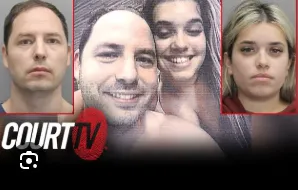
Prosecutors further allege that Brendan directed Peres Magalhaes to participate in the deception by placing phone calls to Ryan while pretending to be Christine. According to investigators, the goal was to reinforce the illusion and ensure Ryan would arrive at the house expecting a consensual encounter.
On February 23, 2023, Ryan arrived at the Banfield residence. Prosecutors allege that Peres Magalhaes was inside the home and told Ryan that Christine was sleeping, encouraging him to enter quietly.
According to the prosecution’s theory, Brendan was not initially present when Ryan entered the home. Instead, prosecutors allege that Peres Magalhaes later called Brendan, signaling that Ryan had arrived as planned.
Authorities say Brendan then drove to the house, entered, and shot Ryan in the head. Prosecutors allege that he then turned on Christine, fatally stabbing her inside the home.
Ryan was later found dead nearby, suffering from gunshot wounds. Christine was discovered inside the residence, having died from stab wounds. The violence, prosecutors say, unfolded quickly but followed a plan that had been set in motion weeks earlier.
After the killings, authorities allege that Brendan and Peres Magalhaes attempted to conceal the true nature of what had occurred. Prosecutors say they reported the incident as though Ryan had been an intruder who attacked Christine, a version of events investigators would later challenge.

The investigation quickly raised questions. Physical evidence, inconsistencies in statements, and forensic findings led detectives to scrutinize the narrative presented by those involved. Over time, the focus shifted toward Brendan and the former au pair.
In October 2024, Peres Magalhaes pleaded guilty to manslaughter in the death of Joseph Ryan. As part of that plea, she agreed to cooperate with prosecutors and provide testimony about the events leading up to the killings.
In a recorded interview obtained by local media, Peres Magalhaes told prosecutors that she and Brendan were involved in a plan to kill Christine. She described Brendan as the architect of the plot, alleging that he directed the actions and decisions that led to the deaths.
She told investigators that the scenario presented to Ryan had been framed as “part of the game,” a role-playing encounter in which fear and resistance were staged elements. Prosecutors argue that this description illustrates how deception was used to lower Ryan’s guard.
Peres Magalhaes is expected to be a key witness at Brendan’s trial. Prosecutors believe her testimony will help establish motive, planning, and intent, tying together digital records, phone calls, and physical evidence.
Brendan Banfield has pleaded not guilty to the charges against him. His defense has not publicly outlined its full strategy, but his attorneys are expected to challenge the credibility of Peres Magalhaes and dispute the prosecution’s timeline and interpretation of events.
The case has drawn attention because of the stark contrast between the alleged actions and the professional backgrounds of those involved. A federal agent, a healthcare worker, and a caregiver became central figures in a story defined by betrayal and loss.

For Christine’s loved ones, the trial represents a painful public examination of a private life. Friends and colleagues remember her as devoted to her work and her child, struggling to reconcile those memories with the allegations presented in court.
Joseph Ryan’s family, meanwhile, faces the reality that he was allegedly lured into a situation he believed was consensual, only to lose his life. Prosecutors argue that deception played a central role in his death.
As opening statements begin, jurors are being asked to evaluate a complex web of digital evidence, testimony, and motive. The prosecution must convince them that the killings were deliberate and planned, not chaotic or accidental.
The defense, in turn, is expected to argue that the state’s case relies heavily on the word of a cooperating witness who has already admitted her own role in one death.
The courtroom has become the place where competing narratives will collide. Emails, phone records, online profiles, and witness testimony will be examined in detail, piece by piece.
Regardless of the outcome, the case has already left irreversible damage. A child has lost her mother. Two families have lost loved ones. And a set of allegations has exposed how deception and secrecy can escalate into irreversible tragedy.
As the trial continues, the focus remains on determining responsibility for what happened inside the Banfield home that February night. The verdict will decide Brendan Banfield’s legal fate, but it cannot undo the loss that brought the case to court.
What remains is a story that challenges assumptions about trust, intimacy, and the dangers that can exist behind closed doors — a reminder that even the most carefully constructed appearances can conceal devastating truths.