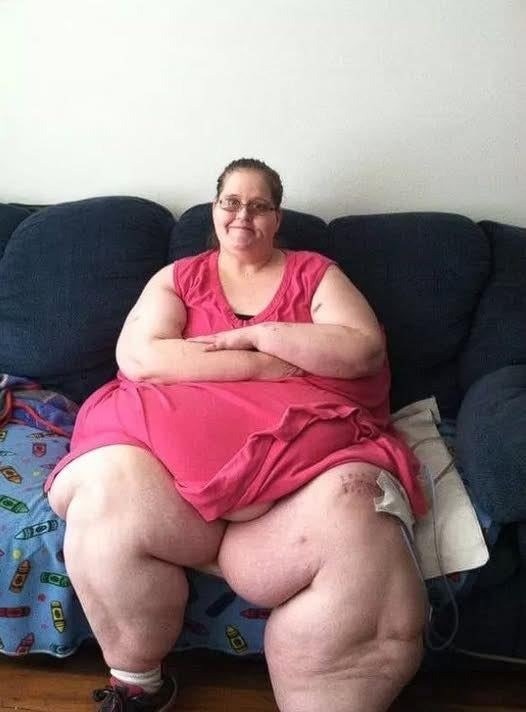
At her heaviest, Charity’s world ended at the edge of the mattress. She measured days by the number of times she could shift her weight without crying, by the minutes her lungs agreed to keep working while she slept. The mirror was an enemy she stopped confronting; selfies were taken from above the chin, posted with filters that softened the truth she already knew. One night, when the skin on her leg split under its own weight and the smell of infection woke her, she whispered to the dark, “Either I do this now, or this room becomes my coffin.”
The surgery table felt narrow as a diving board. She joked with the anesthesiologist—”Make sure you strap me down, I might roll off”—but inside she was counting every breath, bargaining with a body that had never cooperated. When she woke up, her stomach was the size of a banana and her heart felt even smaller, shrunk by fear that she would still find a way to fail. The nurse placed a plastic shot glass of water in her hand; it was the first thing she had ever held that felt heavier than she did.
The first year after surgery was a second childhood in reverse. She learned to sit up without using her arms, to stand without bracing against the wall, to walk the length of a hallway the way toddlers wobble from couch to coffee table. Her living room became a track: twelve steps to the kitchen, twelve steps back. Each round trip earned a tally mark on a whiteboard. At 1,200 marks she cried for an hour, not because she was proud but because she realized she had once needed a wheelchair to travel the same distance.
Food turned into math. Ten almonds, eighty calories. Four ounces of chicken, the size of a deck of cards she had never held in her hands. She kept a scale on the counter like a judge who never blinked. Some nights she still dreamed of entire pepperoni pizzas dripping grease onto her chest, woke up panting and had to walk outside to smell the night air instead of the kitchen. The dreams shrank with her waist, but they never vanished; she just learned to greet them like rude neighbors who would eventually move away.
Skin became the next mountain. When 400 pounds disappeared, what remained hung like deflated balloons—arms that waved even when she didn’t, a stomach apron she tucked into compression garments that left red canals across her hips. She could finally buy jeans at a regular store, but they still had to be two sizes bigger to fit the extra her. A surgeon removed nine pounds of flesh in the first cut; she asked to keep the photo so she could see what letting go actually weighed.
Today Charity stands in front of the same mirror she once avoided, wearing a plain gray T-shirt that fits like a borrowed blanket. She is smaller, yes, but also louder—in the way she speaks up at restaurants to ask for modifications, in the way she tells strangers her story when they stare at her arms. The loose skin is still there, a soft armor that reminds her battles leave scars, and victory rarely looks perfect. She walks the hallway now not for tally marks but because she can, because the air tastes like possibility instead of apology, and because every step is a small love letter to the woman who stayed alive long enough to take them.