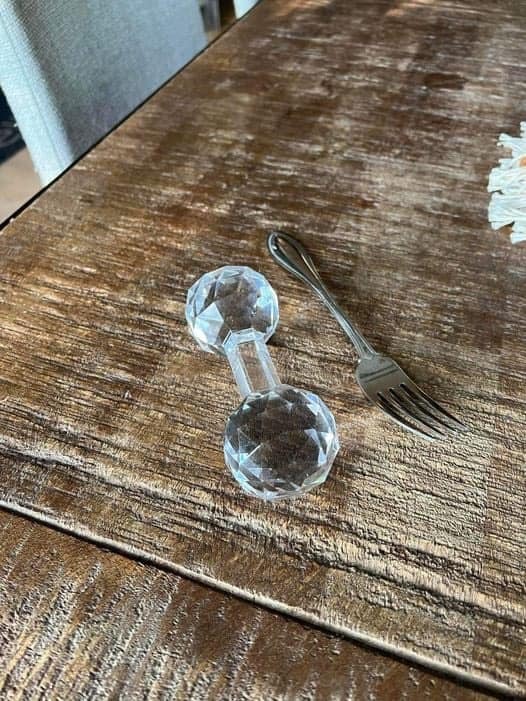
It sat between the butter dish and the sugar bowl like a piece of modern art nobody remembered buying—clear, smooth, and shaped like a miniature barbell with a fat bulge on each end. When my sister-in-law asked me to pass the jam, I pointed at the thing and whispered, “What on earth is that?” She shrugged, my brother shrugged, even their teenage son looked up from his phone long enough to shrug. Four adults, one kitchen stuffed with gadgets, and not a single clue.
Curiosity is a slippery slope, so I snapped a photo and posted it online while the coffee brewed. Within minutes the guesses rolled in: paperweight for elves, tiny baton for a mouse marching band, glass dog bone, baby’s first dumbbell, “alien kettlebell—do not lift.” One joker said it was clearly a device for holding napkins down if you eat outside during a hurricane. The laughter was instant, but the answer stayed hidden.
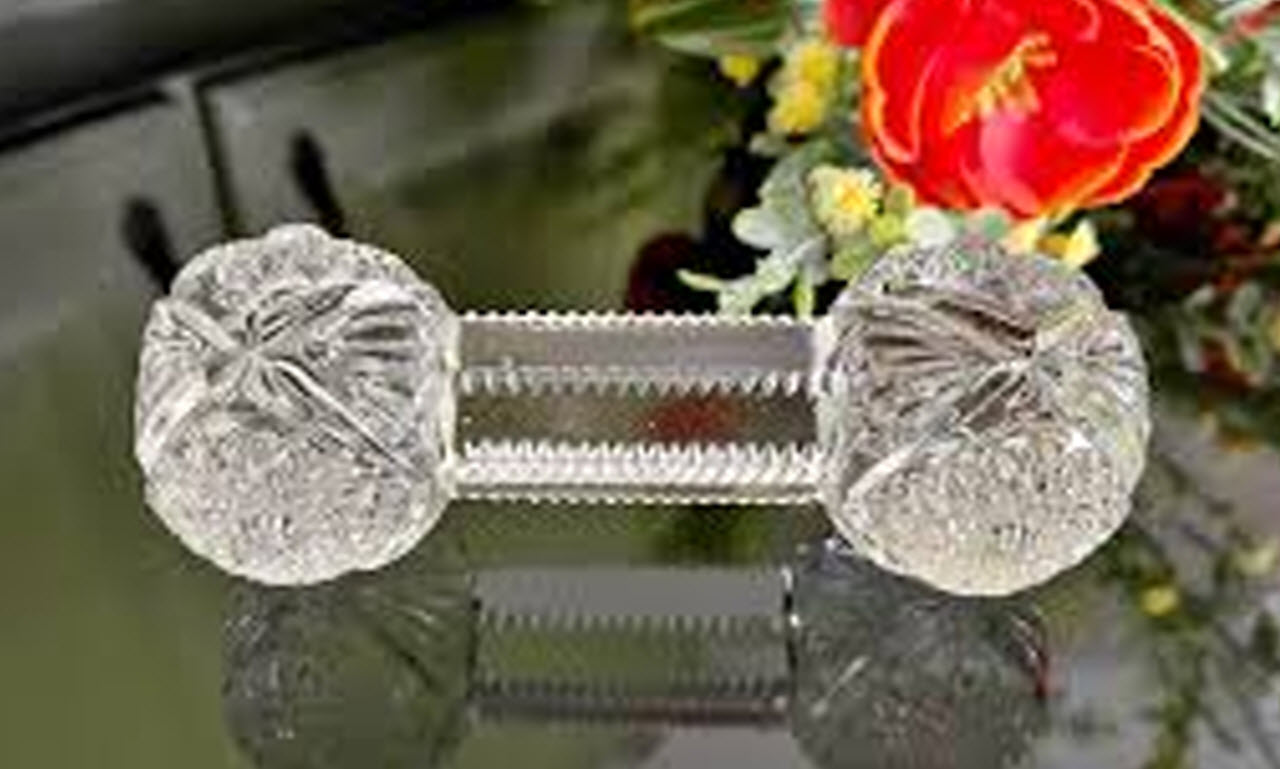
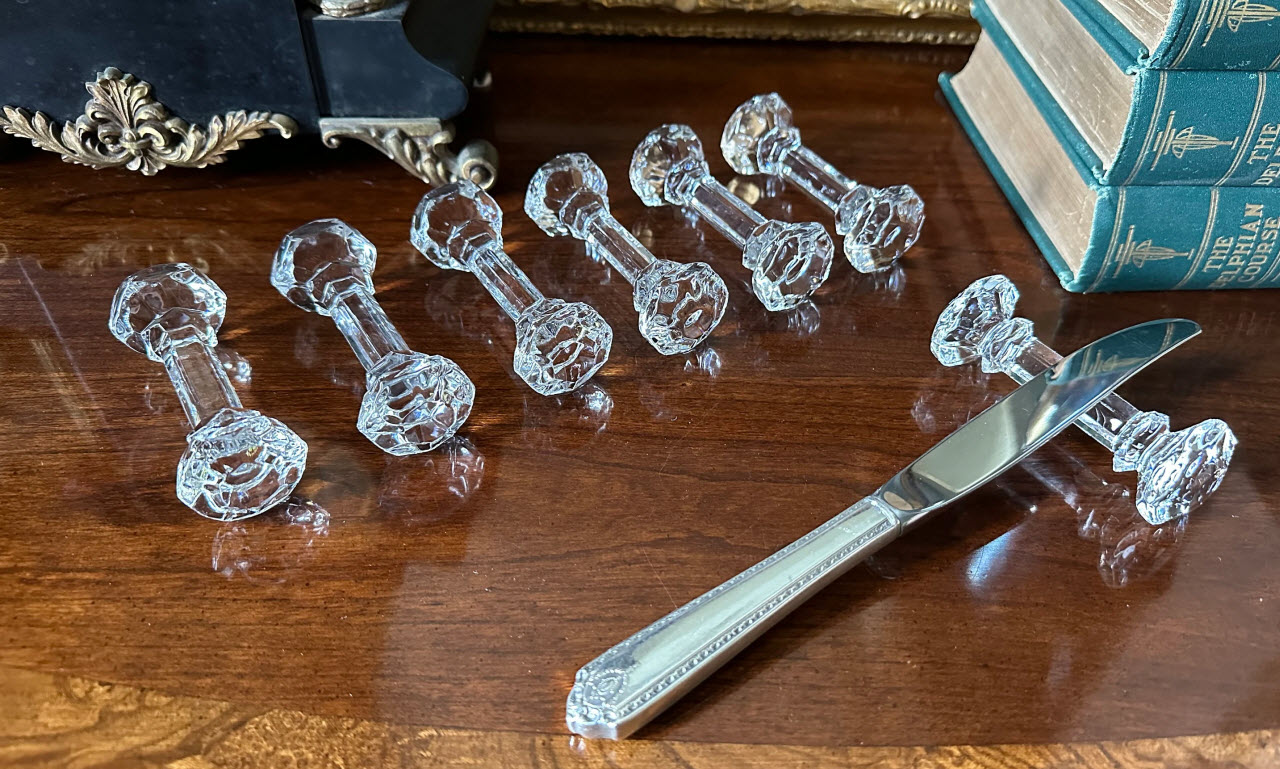
Then an older lady who collects antique silverware spoke up. “That’s a knife rest,” she typed, “and your grandmother would have set one at every place for Sunday roast.” I stared at the screen, then at the object, and suddenly the room felt smaller, like we’d invited a ghost to breakfast. A knife rest: a polite little cradle so your greasy knife wouldn’t stain the tablecloth between bites. Simple, civilized, and now as obsolete as a spittoon.
I lifted the glass barbell and set a butter knife across it. The blade fit perfectly in the dip, the bulbs on each side keeping it level like tiny seesaws. For a second I could almost hear starched napkins unfolding, ice clinking in water goblets, and a grandfather clock chiming somewhere down the hall. The rest of the table looked suddenly sloppy—paper towel squares, jelly smears, a phone buzzing with memes.
My brother’s kid asked why we don’t use them anymore. I told him we eat faster, wash tablecloths less, and generally trust paper towels to soak up sin. He nodded, snapped a picture for his social story, and went back to his cereal. The knife rest stayed on the counter, a clear glass bridge between two centuries, reminding us that even the smallest customs can vanish while we’re not looking—replaced by speed, convenience, and the gentle art of forgetting.