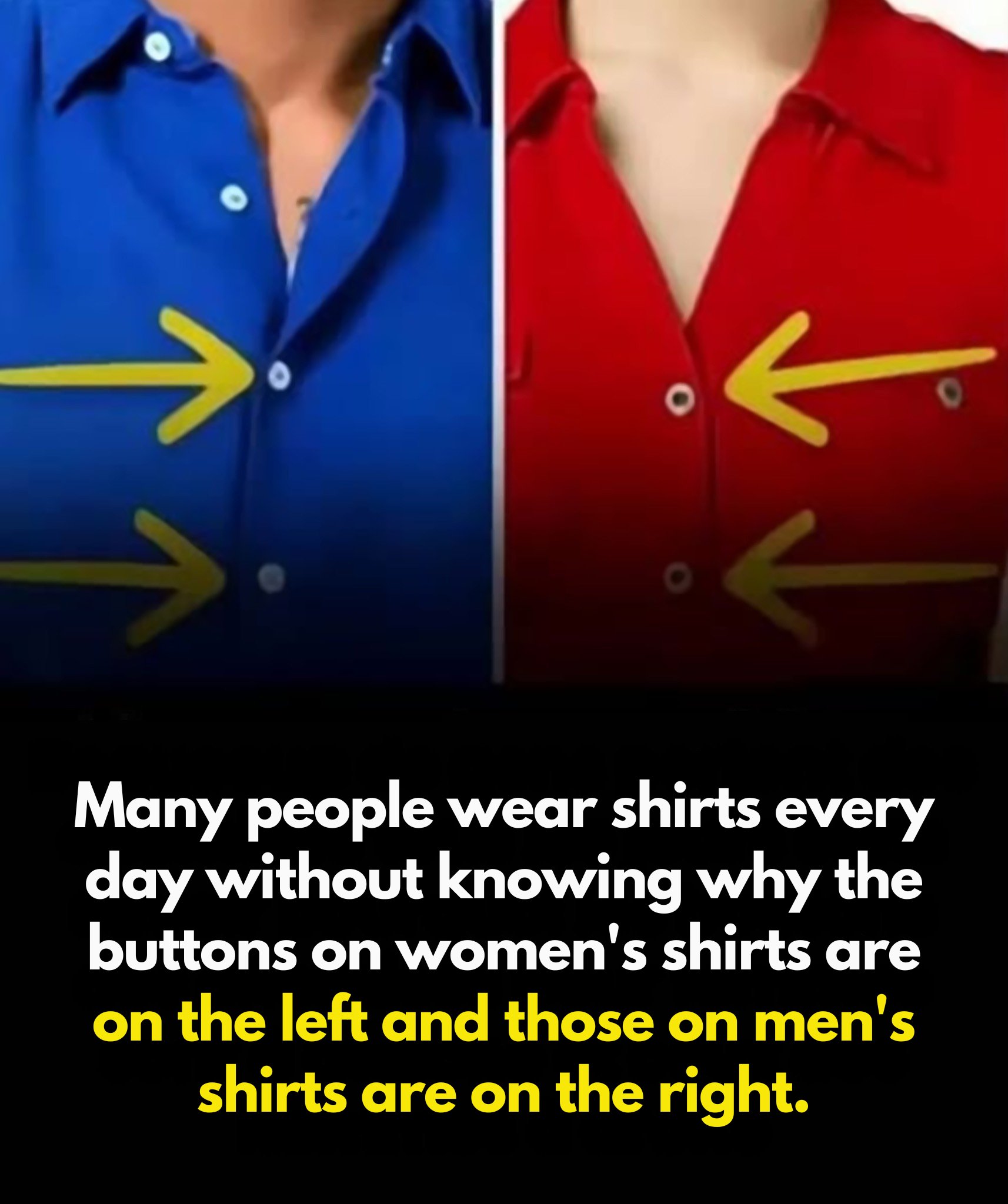
It usually starts with a casual observation. You borrow a shirt, try on a jacket, or simply get dressed in a hurry and something feels off. The buttons are not where your hands expect them to be. That is when many people realise that men’s and women’s clothing are buttoned on opposite sides.
At first, it seems like a random design choice. But it is not. This difference has been around for centuries and has very little to do with comfort or practicality for the person actually wearing the clothes.
How dressing habits shaped button placement
To understand why this tradition exists, you have to look back to the 19th century. At that time, women’s clothing was complex and layered. Corsets, petticoats, heavy skirts, and fitted bodices made getting dressed a slow and structured process.
In wealthier households, women were commonly dressed by maids. Since most people are right-handed, it was easier for the person assisting to fasten buttons that were positioned on the right side of the garment. From the wearer’s perspective, that meant the buttons sat on the left.
Men’s clothing followed a different logic. Men were expected to dress themselves. Their clothes were simpler and more functional, so placing buttons on the right side made sense for right-handed wearers. Over time, this practical distinction hardened into a rule.

Why the rule still exists today
Fast forward to the present, and the original reason no longer applies. Women dress themselves. Clothing is lighter and easier to put on. Yet the button placement has barely changed.
The reason is habit. Fashion relies heavily on repetition and tradition. Patterns are reused. Manufacturing standards stay the same. Designers know that people expect women’s shirts to button one way and men’s the other. Changing it might confuse shoppers, even if it would make dressing easier for many.
Some women already work around this without thinking about it. Right-handed shoppers often prefer men’s shirts because the buttons feel more natural. Others notice the difference only when frustration sets in.
This small design choice quietly reflects how clothing still carries traces of old social structures. Even something as simple as a button can reveal how deeply history is stitched into what we wear every day.