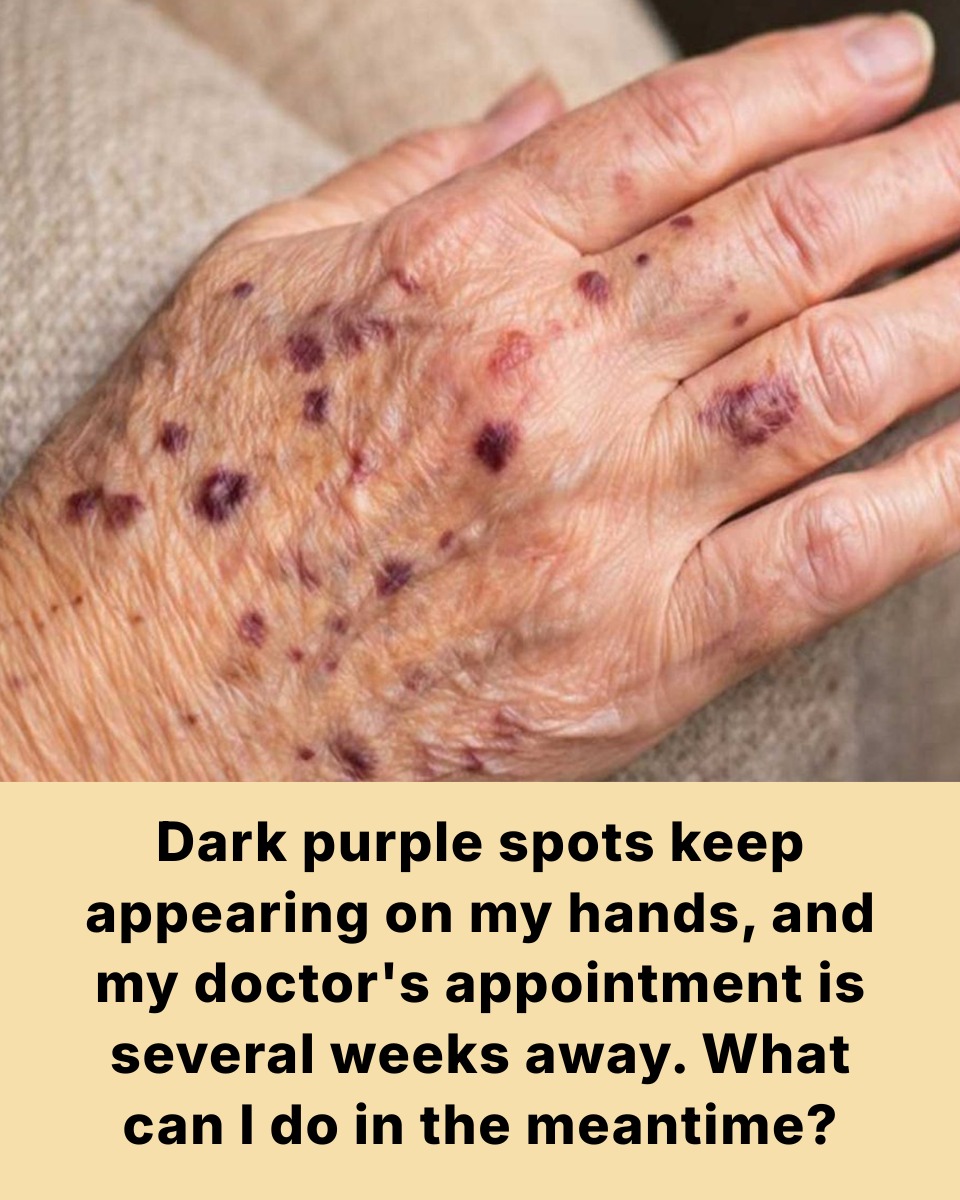
One morning, you notice a dark mark on your hand. Then another appears a few days later. They look like bruises, yet you can’t recall bumping into anything.
Concern starts to build, especially since your medical appointment isn’t for a while. Should you be worried? Change your habits? The good news is that in many cases, these striking marks are more harmless than they appear. There are also simple steps you can take to get through this period with greater peace of mind, even when purple spots show up on your hands.
Why these marks often look more serious than they are
The skin on the hands is thin, exposed, and heavily used every day. Over time, it becomes more fragile, as do the tiny blood vessels just beneath the surface. As a result, even a very minor bump—sometimes barely noticeable—can lead to a purple mark. Although they look dramatic, these spots are usually painless and fade gradually, like a typical bruise, without leaving any lasting effects.
Actinic purpura: a common and benign cause
For many people, these spots are what is known as actinic purpura. It appears mainly on the hands and forearms, areas that have been exposed to the sun over many years. The skin becomes thinner and the blood vessels more fragile. Even though the appearance can be surprising, this condition is generally harmless and does not require specific treatment, which can be reassuring while waiting for a medical appointment.

Signs that deserve closer attention
While waiting for your appointment, simply keep an eye on how things evolve. If the spots become very numerous, painful, swollen, or are accompanied by a general feeling of unwellness, it is better to seek medical advice sooner rather than later. Likewise, a very rapid onset or the presence of other unusual changes—such as extreme fatigue or bleeding—should prompt an earlier consultation.
Habits to avoid right now
Without realizing it, we often put our hands through a lot: carrying heavy bags, doing DIY projects, gardening, or bumping into furniture. Reducing these small, repeated impacts can help prevent new marks from appearing. Wearing gloves for manual tasks and adopting gentler movements can already make a real difference.
A gentle skincare routine
Focus on hydration. Applying a nourishing cream morning and evening helps the skin stay more supple and resilient. Avoid harsh scrubs and heavily scented products, which can further weaken the skin. The more comfortable the skin feels, the better it can protect itself.
Sun protection, even for your hands
It’s easy to forget, but hands are highly exposed to UV rays, even in everyday city life. Using a daily sunscreen can help limit further skin fragility. This simple habit can have a lasting effect on the skin’s appearance.
Adapting daily life without overcomplicating things
Long sleeves, light gloves for household chores, paying attention to sharp furniture edges—small adjustments are often enough. The goal isn’t to live in fear, but to avoid repeated knocks on already sensitive skin.

Medications and supplements: stay mindful
Certain medications or supplements can make purplish marks more likely. Without changing anything on your own, simply note what you are taking so you can discuss it calmly during your appointment. This will help your healthcare professional get a complete picture.
Soothing and concealing if needed
If the area feels tender, a cold compress can provide temporary relief. And if the appearance bothers you, a gentle concealer designed for sensitive skin can help you feel more comfortable day to day, without guilt or risk to your skin.
Preparing for your appointment
Taking photos, noting when the spots appear, how long they last, and whether they change in appearance will make your consultation more effective and reassuring.
While you wait for your appointment, the key is to stay attentive without panicking, and to care for your hands with gentleness and kindness.