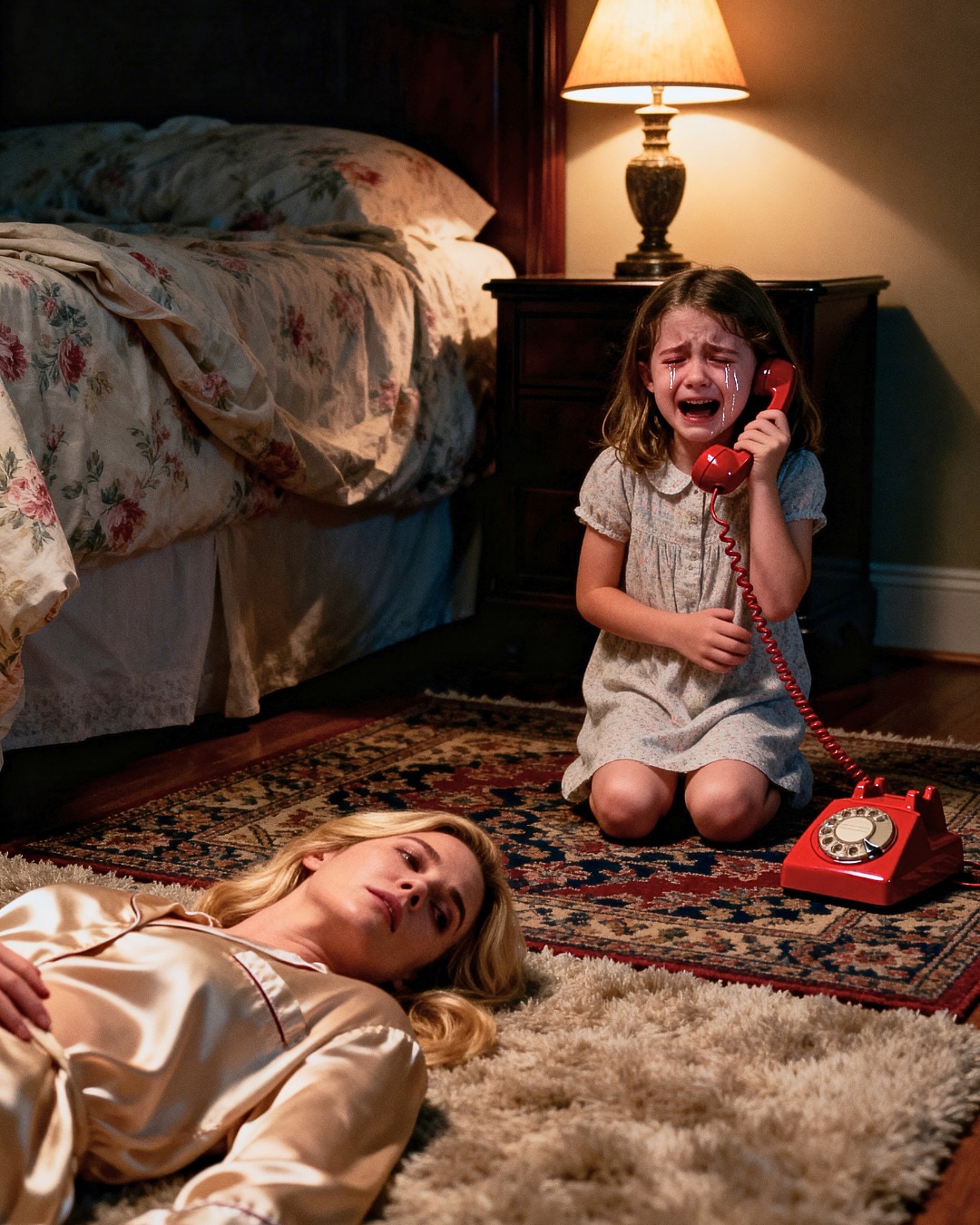
Near midnight, my granddaughter’s voice shook through the phone. “Grandma… Mom hasn’t opened her eyes all day.”
I forced myself to stay calm. “Where are you? What happened?”
And then the line went dead.
I drove to their house as fast as I could. The lights were off, the front door locked, no one answering. I called 911. What the police uncovered that night still feels unreal.
My phone had rung at 11:47 p.m.
I almost ignored it. At sixty-four, late-night calls usually bring bad news. But when I saw “Chloe” on the screen—my eight-year-old granddaughter—I sat up instantly.
“Chloe?” I said, dread already creeping in.
Her voice was small and trembling. “Grandma… Mom hasn’t woken up all day.”
The words hollowed me out.
“What do you mean?” I asked carefully. “Where are you?”
“In my room,” she whispered. I could hear faint television static. “She’s been asleep since this morning. I tried to wake her but she didn’t…”
“Go check if she’s breathing,” I said, getting out of bed. “Touch her shoulder.”
“I can’t. She told me not to come in. But she won’t answer now.”
My throat tightened. “Is her door open?”
“Just a little. It’s dark.”
“Turn on the light.”
“I’m scared.”
“You did the right thing calling me,” I said steadily. “Stay on the phone. I’m calling 911 too. Tell me your address.”
She started to answer—
Static.
“Chloe? Chloe!”
The call dropped.
I called back immediately. Voicemail.
Cold panic flooded through me.
My daughter, Rachel Thompson, lived only ten minutes away in a small rental house. Rachel was thirty-five, organized, cautious. She didn’t sleep all day. And Chloe wouldn’t call me at midnight unless she was afraid.
I grabbed my keys and drove.
The house was dark. No porch light. No car in the driveway.
I pounded on the door. “Rachel! Chloe!”
Nothing.
Through the kitchen window, everything looked… stripped. Bare counters. No lamp glow.
Then I saw Chloe’s purple backpack on the floor near the back door, unzipped like it had been dropped mid-step.
My heart flipped.
I called 911.
“My granddaughter called saying her mother hasn’t woken up all day,” I told dispatch. “Now the house is empty.”
Officers arrived within minutes—Officer Megan Collins and Officer Daniel Brooks. Flashlights swept the yard.
“You’re the caller?” Collins asked.

“Yes,” I said. “She was inside when she called. Now they’re gone.”
Brooks checked the doors. “No forced entry.”
Collins studied me. “Anyone causing problems recently?”
I hesitated. “Her ex. Mark Reynolds. Chloe’s father. He’s been pushing for more custody.”
Collins’s radio crackled. She listened, then looked at me.
“Ma’am, a 911 call came from this address at 11:42 p.m.”
My stomach dropped. “What?”
“It was canceled almost immediately. The caller said it was a mistake.”
“That wasn’t Chloe,” I whispered.
Collins nodded slowly. “The voice was an adult male.”
They requested permission to enter. Within minutes, the side door was forced open.
“Police! Rachel Thompson! Chloe Thompson!”
Silence.
The air inside smelled sharply of cleaning solution. The living room was stripped—no photos, no decorations, no television. The refrigerator stood open and empty.
“It looks like someone cleared it out,” Brooks said quietly.
“She wouldn’t just leave,” I insisted.
Rachel’s bedroom was bare. Closet empty. Drawers cleared.
Chloe’s room—same thing. Mattress only. No stuffed animals.
On the floor sat Chloe’s tablet.
Brooks picked it up carefully. A sticky note was taped to the back.
He read it aloud:
“IF YOU COME LOOKING, YOU’LL NEVER SEE THEM AGAIN.”
“STOP CALLING.”
My knees weakened.
“That’s Mark,” I said. I didn’t need proof.
Collins’s voice hardened. “We’re treating this as an abduction.”
In the laundry room, faint wet footprints led toward the back door. On the handle, a dark smear.
“Possibly blood,” Brooks said.
The house hadn’t just been emptied.
It had been wiped.
Except for Chloe’s call.
If she called at 11:47, she was alive then.
By 2 a.m., detectives arrived. Detective Samuel Ortiz introduced himself.
“Custody arrangement?” he asked.
“Supervised visits only,” I said. “He lost his temper in court.”
“Recent contact?”
“He kept texting from new numbers. She blocked him.”
Ortiz nodded toward the tablet in an evidence bag. “Last outgoing call was to you. Device lost signal at 11:47. It pinged again nineteen minutes later near the highway.”
“They were moving,” I said.
“Yes. That timeline helps.”
“Anywhere he might go?”
I swallowed. “He once mentioned a hunting cabin near Prescott. Said there’s no cell service.”
Ortiz immediately relayed the information.
Soon an AMBER Alert went out with Chloe’s photo and Mark’s gray SUV. My own phone buzzed with it.
At dawn, Ortiz returned.
“We have a sighting,” he said. “Gas station camera captured his vehicle.”
Hours later, officers located the SUV abandoned near a desert access road. Footprints led to a remote cabin.
“They’re inside,” Ortiz told me over the phone. “We’re negotiating.”
Every second felt endless.
Finally, my phone rang again.
“We’ve secured the scene,” he said. “Chloe is alive.”
I sank to the floor, sobbing.
“And Rachel?”
“She’s alive,” he added quickly. “Unconscious when found. Likely sedated. Paramedics are treating her.”
I could barely breathe.
Later I learned what happened.
Mark forced his way in early that morning. When Rachel threatened to call police, he assaulted her and injected her with a sedative. He waited until night to move them.
Chloe had used her tablet when he stepped outside briefly. That call—cut short—created the timeline detectives needed.
At the hospital, Chloe ran into my arms.
“I didn’t know what to do,” she cried. “He said if I screamed—”
“You did exactly what you needed to,” I told her. “You called.”
Rachel lay pale but breathing steadily. When she saw me, tears filled her eyes.
“I thought I could handle him,” she whispered.
“You don’t have to anymore,” I said.
What stays with me isn’t just the terror.
It’s how close we came to losing everything.
And how one brave child, one trembling phone call at 11:47 p.m., changed the ending.