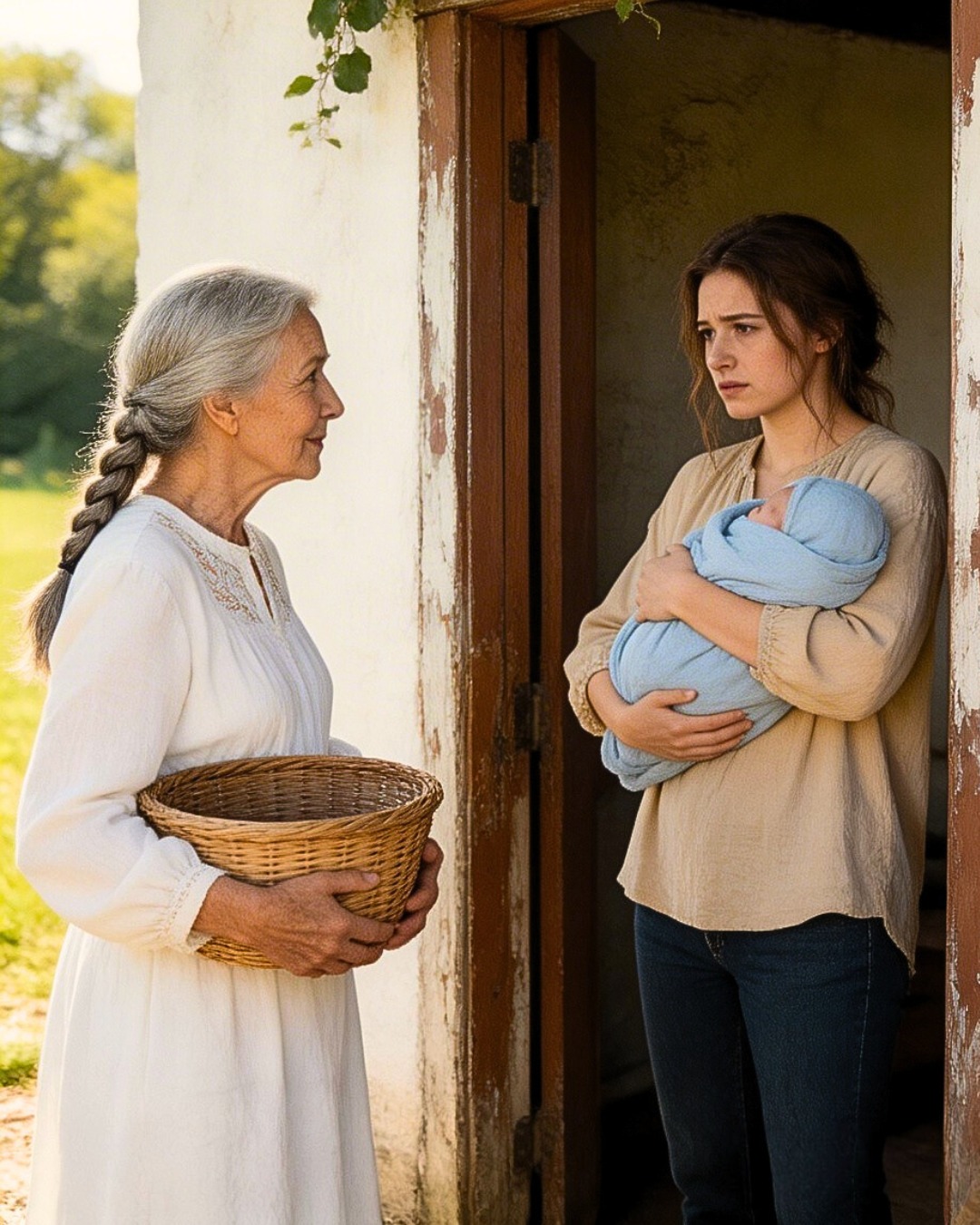
She stood there with quivering lips and told me that salt was the only excuse she could invent to knock on my door without feeling ashamed of what she truly needed.
At first, I didn’t understand. The anger that had been swelling inside my chest slowly dissolved into confusion, and then into a quiet, creeping guilt.
Margaret explained that ever since her husband died two years ago, her apartment had grown unbearably silent. Some days passed without her hearing another human voice.
Her children lived far away in other cities, busy with careers and families of their own. They called now and then, but rarely came to see the mother who had once guided their tiny steps.
“I don’t really need the salt,” she confessed softly, twisting the edge of her cardigan as though afraid I might shut the door before she finished. “I just needed a reason to see a friendly face. To hear someone say good afternoon. To remember that I still exist.”
Her words filled the narrow hallway between us, heavy and painfully honest.
Behind me, Lily stepped closer and wrapped her small arms around my waist, sensing the shift even if she didn’t fully understand it.
Heat rose to my cheeks as I remembered every impatient sigh, every forced smile, every silent complaint about the disappearing salt packets. I had seen only inconvenience, never imagining that her repeated request was a fragile bridge built from loneliness.
“I’m so sorry,” I whispered, my voice trembling.
Margaret shook her head gently, as if she had expected nothing more from a young mother already overwhelmed.
“I shouldn’t bother you,” she murmured, though her eyes betrayed how deeply she longed for connection.
Then Lily stepped forward, her curls bouncing. “Grandma Margaret, do you want to come in and have cookies with us?”
The word “Grandma” startled her. I saw her eyes widen, then soften with a warmth I hadn’t noticed before.
I hesitated only a moment before stepping aside. Perhaps what we both needed wasn’t distance, but a shared table.
That afternoon, the three of us sat in my small kitchen while late sunlight slipped through faded curtains and painted everything gold.
Margaret began slowly, telling stories of her childhood in a small town where neighbors borrowed flour, sugar, and salt without counting or shame. Doors stayed unlocked. Laughter traveled easily from house to house. No one felt embarrassed to admit they needed company.
Lily listened with wide eyes, completely enchanted.
Something inside me began to thaw. I admitted that raising a child alone often felt like walking a tightrope without a net—balancing fear, exhaustion, and determination every day.
Margaret reached across the table and covered my hand with her thin, steady one. “You are stronger than you think,” she said gently. “But even the strongest hearts need someone to lean on.”
In that moment, I realized loneliness had been living in my apartment too. Michael’s absence had left a hollow space I tried to fill with routine and responsibility, convincing myself that independence meant never asking for help.
Yet here was a woman brave enough to knock again and again, risking rejection just to keep loneliness at bay.
After that day, the knocks continued—but they changed. They were no longer sharp interruptions, but gentle reminders of shared afternoons.
Sometimes Margaret still asked for salt, now with a playful smile that made Lily giggle as she ran to the cabinet. Other times she brought homemade soup, warm bread, or stories wrapped in nostalgia.
Our apartment slowly became a meeting place where crayons and knitting needles shared the same worn table.
Margaret began picking Lily up from kindergarten when my work ran late. Lily adored her, clinging to every story and lesson about patience and kindness. In return, Margaret seemed lighter, her steps steadier, her laughter easier, as if purpose had returned.
Neighbors noticed the change too. The elderly woman in the gray cardigan no longer walked with her head down, but with a spark in her eyes.
One evening, watching Lily fall asleep with a book Margaret had lent us, gratitude settled deep in my chest. What had started as irritation over something trivial had become a bond neither of us knew we needed.
Life didn’t suddenly become easy. Bills still piled up. Exhaustion still pressed on my shoulders. But now, instead of suffering alone, I found myself knocking gently on Margaret’s door—sometimes with coffee instead of complaints.
We would sit in comforting silence, and I allowed myself to admit when I was afraid.
“Life isn’t about avoiding hardship,” she once told me, stirring sugar into her cup. “It’s about not facing it alone.”
Those words became my quiet mantra.
Lily proudly introduced her as “Grandma Margaret” at school events and neighborhood gatherings. A chosen family formed before my eyes, built not by blood but by repeated knocks and open doors.
The building itself felt warmer. Other neighbors began stopping by—sometimes to borrow ingredients, sometimes just to talk. It was as if Margaret’s courage reminded us that community begins with vulnerability.
Nearly a year later, on a rainy afternoon, she let herself in with the spare key I had given her. She found me staring at a stack of bills, tears threatening to spill.
Without speaking, she placed a small jar of coins on the table.
“This isn’t charity,” she said gently, reading the protest in my eyes. “It’s what family does.”
I realized then that pride had been another form of loneliness.
Accepting her help felt humbling and freeing at once.
Over time, our roles blended. Sometimes she leaned on me for errands and doctor appointments. Sometimes I leaned on her wisdom.
Lily grew taller, her laughter still bright enough to chase away darkness. She often asked why Grandma Margaret always smiled when someone mentioned salt.
“Because salt makes everything taste better,” Margaret would reply with a wink.
Years later, when Lily was old enough, I told her the full story of that first Friday afternoon. She hugged me tightly and thanked me for opening the door.
Eventually, Margaret’s health began to fade. I repaid her visits by sitting beside her bed, reading aloud, holding her hand.
Even when her voice weakened, she would sometimes whisper, “Do you have a little salt?” and we would smile through tears.
The day she passed was quiet and peaceful.
Lily cried openly, grieving not just a neighbor but the grandmother who had shaped her childhood.
At her memorial, I shared how a simple request had changed our lives. I spoke of loneliness, of pride, of the courage to knock and the grace to answer kindly.
Several neighbors later admitted they too had felt isolated, but never knew how to reach out.
Margaret’s story became a gentle reminder that the smallest needs can hide the deepest longings.
Even now, when I buy salt, I pause before placing it in the cabinet. I remember the knock that once irritated me and the friendship that grew from misunderstanding.
Lily, older and wiser now, says she hopes to become the kind of person who notices when someone is asking for more than they say.
I tell her empathy is like salt—barely noticed when balanced, but deeply missed when absent.
Our apartment is still small, still filled with the ordinary chaos of life.
But it no longer feels like a place of survival alone. It is a home seasoned with shared memories and quiet acts of love.
Sometimes, on still afternoons, I almost expect to hear that familiar knock.
When silence lingers, I close my eyes and whisper thank you to the woman who taught me to open my door.
Because in the end, it was never about salt at all. It was about the fragile, beautiful courage it takes to admit that we need each other.