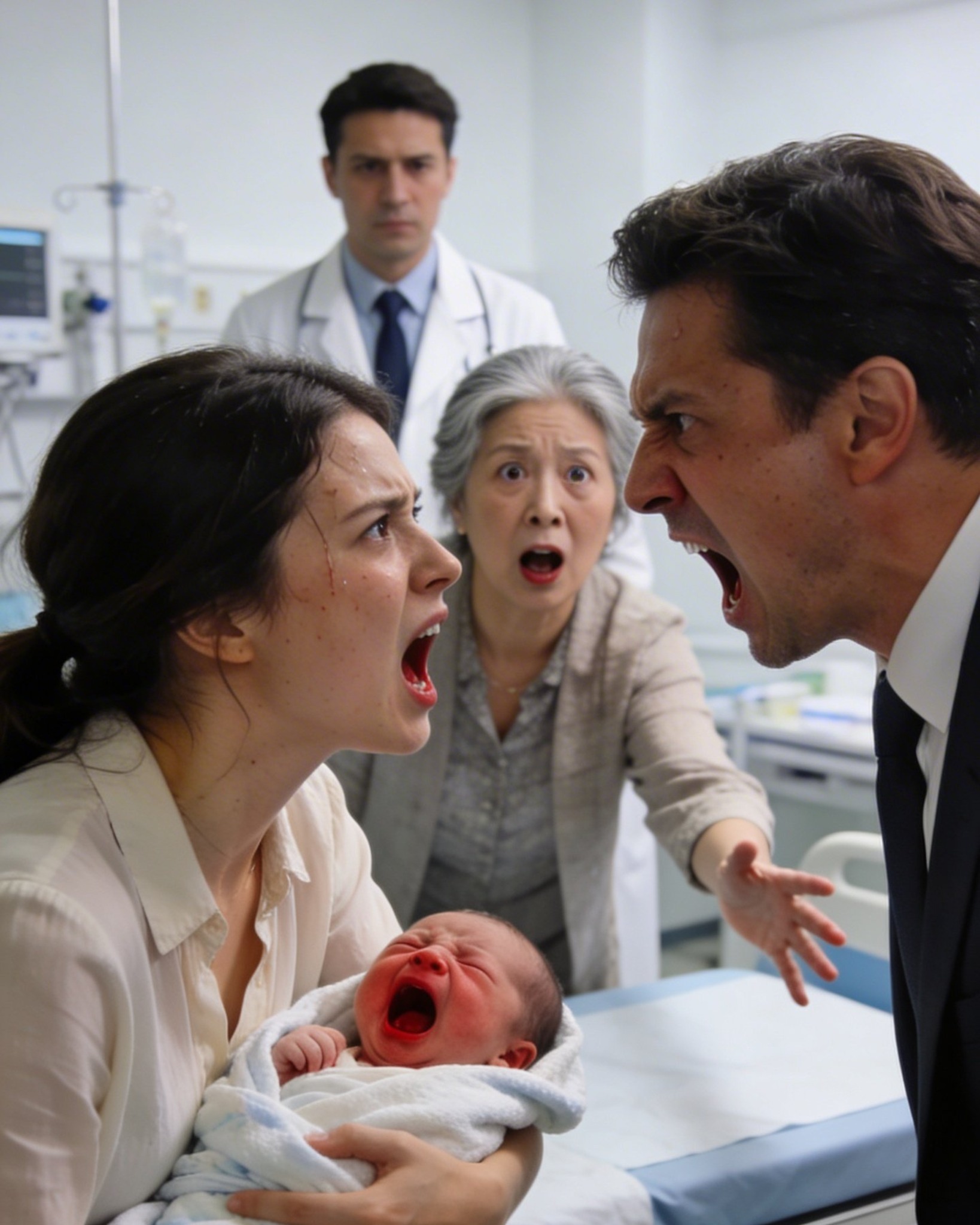
“Mrs. Bennett, this is urgent,” he said quietly. “You need to install hidden cameras immediately. Your baby is afraid of someone.”
Mornings in Brookline looked picture-perfect from the outside — trimmed hedges, quiet sidewalks, luxury SUVs in polished driveways.
Inside our pale blue colonial, my mornings felt like anxiety wrapped in routine.
My name is Rachel Bennett. After ten years climbing the ladder at a Boston marketing firm, I had returned to work just three months after giving birth to my daughter, Lily. I told myself I could balance both worlds.
But something felt wrong.
Every single morning, Lily would start crying the moment my husband, Daniel, walked into the room.
Not normal baby crying. Not hunger. Not fussiness.
Fear.
At first, I dismissed it. Babies cry. That’s what everyone says.
But the pattern became impossible to ignore.
Her tiny body would stiffen. Her fists would clench. Her breathing would turn shallow. And when Daniel tried to hold her, she would scream as if something inside her was bracing for danger.
“Maybe you’re doing something wrong,” Daniel muttered one morning. “Other babies aren’t like this.”
The words planted doubt deep in my chest.

During the day, Lily stayed with my mother-in-law, Carol Bennett, a retired nurse who had insisted on helping so we wouldn’t need a nanny. With her, Lily seemed calm. Peaceful. Safe.
But evenings brought the tension back.
Then came the pediatric appointment.
Dr. Harris, a seasoned physician with decades of experience, observed Lily carefully during her exam. When Daniel held her, she erupted into panicked screams. When a male nurse stepped closer, she froze — completely rigid.
But when Carol entered the room and took Lily into her arms, my daughter melted against her shoulder.
That’s when the doctor asked to speak to me alone.
“Rachel,” he said gently, “your daughter is showing a selective fear response. Babies can instinctively sense when something feels unsafe.”
My throat went dry.
“Install hidden cameras,” he continued. “Immediately. Monitor what happens when you’re not there.”
I felt the world tilt.
That night, with shaking hands, I set up discreet cameras in the living room, hallway, and nursery.
The next day during my lunch break, I locked myself in a conference room and opened the live feed on my phone.
At first, everything looked normal. Carol feeding Lily. Soft lullabies. Calm.
Then the front door opened.
Daniel walked in hours earlier than he’d told me he would.
Carol’s posture stiffened.
He reached for Lily.
The second she touched his arms, her body reacted exactly as it had in the clinic — stiff legs, curled fists, shallow breaths.
But this time, I saw something I could never unsee.
Daniel didn’t comfort her.
He glanced around the room first.
As if checking whether anyone was watching.
My heart pounded so loudly I could barely hear the audio.
Carol stepped forward quickly, saying something I couldn’t make out.
Daniel turned slightly away from her.
Lily’s cries escalated into pure terror.
Then he leaned closer to her tiny face and whispered something.
I replayed the footage.
Once.
Twice.
My blood ran cold.
The man I had trusted. The father I believed my daughter was safe with.
In that moment, I realized Lily had been trying to tell me the truth all along.
And I almost didn’t listen.