I can still remember the smell, even now, twenty years later.
It was a mix of industrial glue and burnt hair under harsh fluorescent lights.
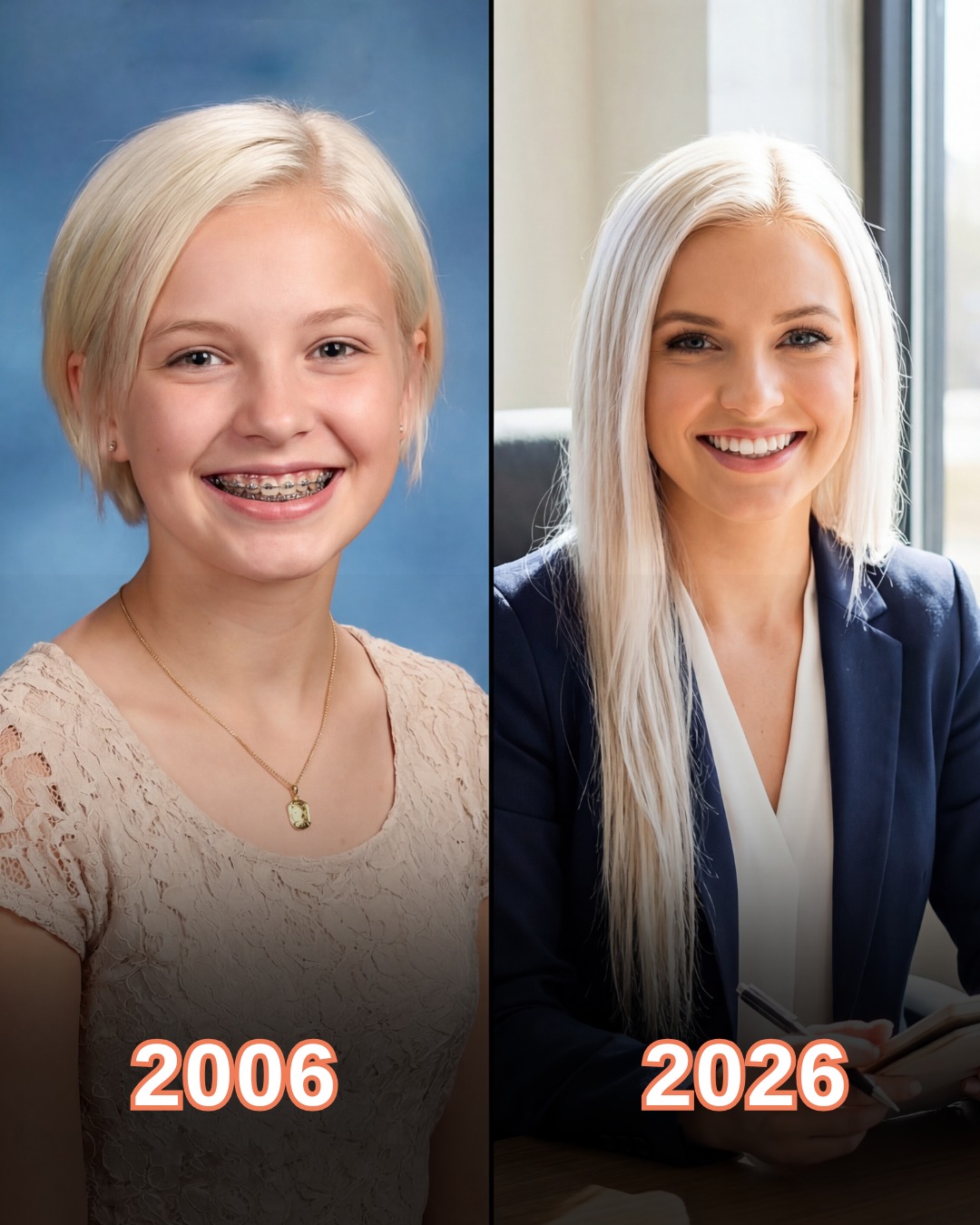
I was sixteen, sitting in sophomore chemistry, trying my best to disappear into the background. Quiet. Careful. Invisible.
But someone else had different plans.
He sat behind me that semester, wearing his football jacket like a badge of honor. Loud, confident, admired by everyone.
While Mr. Carter droned on about covalent bonds, I felt a slight tug at my braid. I assumed it was nothing.
Until the bell rang.
When I stood up, a sharp pain shot through my scalp—and the entire class burst into laughter before I even understood why.
He had glued my braid to the metal frame of the desk.
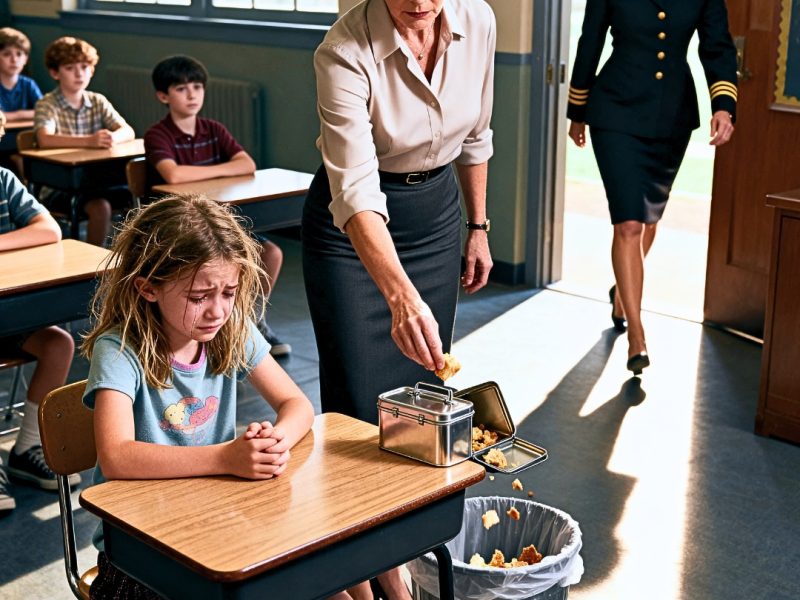
The school nurse had to cut me free, leaving a bald patch the size of a baseball.
For the rest of high school, they called me “Patch.”
That kind of humiliation doesn’t fade—it hardens. It teaches you something.
If I couldn’t be liked, I would become powerful.
Twenty years later, I was the one in control.
I ran a regional community bank. I didn’t shrink in rooms anymore—I owned them.
When the previous owner retired, I bought a controlling share with investors. Now I personally reviewed high-risk loans.
Two weeks before everything changed, my assistant, Eric, walked in and placed a file on my desk.
“You’ll want to see this one,” he said.
I glanced at the name.
Jason.
Same hometown. Same age.
My fingers paused on the folder.
I didn’t believe in fate—but I did believe in irony.
My former bully was asking for a $50,000 loan.
On paper, it was an easy rejection. Bad credit. Maxed-out cards. Missed payments. No collateral.
Then I saw the purpose: emergency heart surgery for his eight-year-old daughter.
I closed the file slowly.
“Send him in,” I said.
When he walked through the door, I almost didn’t recognize him.
The confident athlete was gone. In his place stood a thin, worn-out man in a wrinkled suit, shoulders weighed down by life.
“Thank you for seeing me,” he said, sitting down.
He didn’t recognize me.
I leaned back.
“Chemistry class feels like a lifetime ago, doesn’t it?” I said.
His face went pale.
His eyes darted to my nameplate—then back to me. I watched the hope drain from his expression.
“I… I didn’t know,” he said quickly, standing. “I’m sorry. I shouldn’t have come.”
“Sit,” I said.
He sat.
His hands were shaking.
“I know what I did,” he said quietly. “I was cruel. I thought it was funny. But please… don’t take it out on her.”
“Your daughter?” I asked.
He nodded. “Her name’s Sophie. She has a congenital heart condition. Surgery’s in two weeks. I don’t have insurance. I just… I can’t lose her.”
He looked completely broken.
The rejection stamp sat on my desk.
So did the approval one.
I let the silence stretch.
“I know my credit is bad,” he added. “The pandemic wiped out my construction jobs. I’ve been trying to recover ever since.”
I studied him for a moment.
Then I signed the loan.
Approved.
Full amount.
Zero interest.
His head snapped up in disbelief.
“But,” I added, sliding a contract across the desk, “there’s one condition.”
He swallowed. “What is it?”
“Read the last page.”
I had added a handwritten clause.
He scanned it—and froze.
“You can’t be serious,” he whispered.
“I am.”
He would have to return to our old high school and speak at the anti-bullying assembly the next day.
He had to tell the truth—what he did, how he humiliated me, using my full name. No minimizing. No excuses.
The event would be recorded.
If he refused, the loan was void.
“You want me to humiliate myself,” he said.
“I want you to be honest.”
He paced once, clearly torn.
“My daughter’s surgery is in two weeks. I don’t have time for this.”
“You have until the assembly ends,” I replied. “Funds will be transferred immediately after.”
“Claire… I was just a kid.”
“So was I.”
The conflict in his eyes was clear—pride against fatherhood.
After a long moment, he picked up the pen.
And signed.
“I’ll be there,” he said.
The next day, I walked into my old high school auditorium.
The building hadn’t changed much.
The principal, Mrs. Reynolds, greeted me warmly. “Thank you for supporting this initiative.”
I nodded.
Inside, the room buzzed with students and parents. A banner hung across the stage: Words Have Weight.
I stood in the back.
Jason waited offstage, pacing, looking like a man about to walk into fire.
For a second, I thought he might run.
But he didn’t.
When his name was called, he walked up slowly and took the podium.
“I was popular,” he began. “I thought that made me important.”
He paused.
He could’ve softened it. Generalized. Hidden behind vague words.
But then he saw me.
And chose the truth.
“I glued her braid to her desk,” he said.
Gasps filled the room.
“I thought it was funny. I wanted people to laugh—and they did. The nurse had to cut her hair. She had a bald patch for weeks. We called her ‘Patch.’ I led that.”
The room fell silent.
“It took me years to understand—it wasn’t a joke. It was cruelty.”
Students sat up straighter.
“I told myself we were just kids. But we knew better.”
His voice cracked.
“I built my identity on being tough. But strength without kindness isn’t strength—it’s insecurity.”
Then he looked at me.
“Claire… I’m sorry. Not because I need something. But because you didn’t deserve that. You deserved respect.”
The apology felt real.
Raw.
“I have a daughter now,” he continued. “When I imagine someone treating her that way… it makes me sick. That’s when I understood what I did.”
He took a breath.
“I can’t change the past. But I can choose who I am now. And Claire—thank you for giving me that chance.”
The room erupted in applause.
I hadn’t expected that.
It felt bigger than just us.
Afterward, I waited until the crowd thinned.
“You did it,” I said.
He let out a shaky breath. “I almost didn’t.”
“I could tell.”
“When I saw you… I realized I’ve spent twenty years protecting the wrong version of myself.”
I nodded.
“The money will be transferred today,” I said. “But come back to the bank with me.”
“Now?”
“Yes.”
Back in my office, I reviewed his financial history again.
“You made mistakes,” I said. “But not all of this is your fault. Medical bills. Failed contracts. You tried to keep things afloat.”
He nodded quietly.
“I can help you restructure everything,” I continued. “We’ll consolidate your debt into one manageable payment. If you follow the plan for a year, your credit will recover.”
He stared at me.
“You’d really do that?”
“For your daughter,” I said. “And because accountability should lead to growth.”
His composure finally broke.
“I don’t deserve this.”
“Maybe not before,” I said gently. “But now… you do.”
He hesitated.
“Can I…?”
I nodded.
We hugged.
Not to erase the past—but to acknowledge it.
As we walked out together, something inside me felt lighter.
For the first time in twenty years, that memory no longer hurt.
It gave me closure.
And I finally understood something important:
Power isn’t just about control.
It’s about choosing what you do with it.