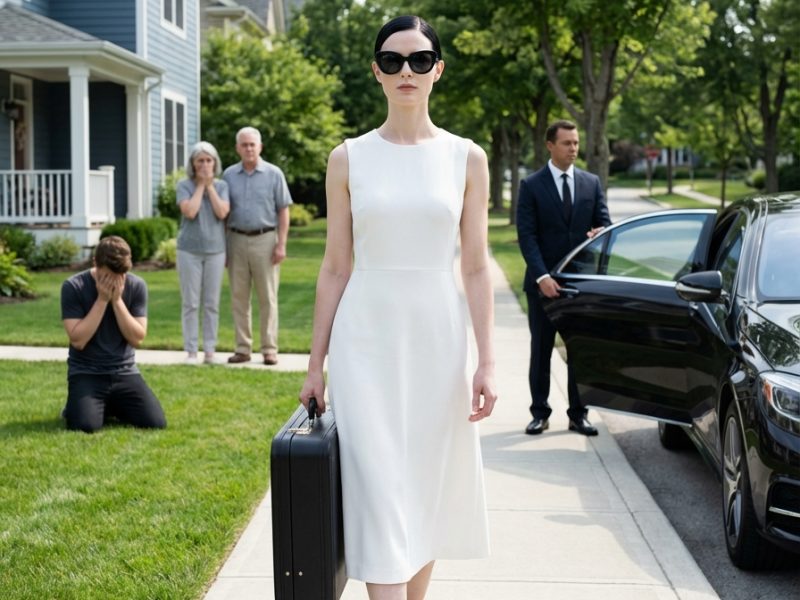
But it wasn’t greed that made my face go cold.
It was the sudden, painful clarity that she wasn’t grieving.
She was celebrating.
Her name was Vanessa Carter, and my son—Daniel Carter—had loved her enough to marry her.
Around us, the funeral in Chicago moved along as expected: white lilies, hushed condolences, polite embraces that never quite touched the depth of my loss. I stood by my son’s casket, holding my breath together, clutching a small cross in my purse so my hands wouldn’t shake.
And then she whispered it.
“Don’t get your hopes up, Margaret,” she said softly, smiling just enough to sting. “Daniel made sure of everything. You won’t see a dime.”
I didn’t respond. I couldn’t.
Because when a mother loses her child, even crying takes strength—and I had none left.
Daniel wasn’t just the man the media talked about.
They called him “the tech prodigy who built a multimillion-dollar app from nothing.”
A visionary. A rising star.
But I didn’t know a headline.
I knew a skinny boy who used to take apart old radios just to understand how they worked.
A teenager who fixed phones after school to help pay bills.
A young man who refused to accept that he was born to struggle.
We lived in a cramped apartment in Detroit. I sewed uniforms and did alterations to keep us afloat. Daniel studied, worked, helped—and still dreamed bigger than our walls could hold.
His company started on a folding table, with a borrowed laptop and wires everywhere. He lived on cheap coffee and leftover pastries, often falling asleep mid-work.
I used to cover him with a blanket and pretend I hadn’t been crying.
Because some exhaustion isn’t just fatigue.
It’s love pushing against fear.
Even after success found him, Daniel never changed with me.
He called to check if I’d eaten. Sent me silly photos from his office. Laughed when people treated him like a celebrity.
He was still my son.
Brilliant. Driven. But kind.
Still mine.
He met Vanessa at a startup gala.
The first time she came to my home, she was flawless—elegant dress, perfect manners, a smile that said exactly what people wanted to hear.
She brought flowers. Hugged me warmly.
Everything about her seemed… polished.
Too polished.
I ignored the feeling.
That was my mistake.
After the wedding, things shifted slowly.
Fewer calls. Cancelled visits. Missed dinners.
When I did see Daniel, he looked drained—not the honest tiredness of hard work, but something heavier. Quieter.
“Just tired, Mom,” he’d say.
But over time, that answer felt less like truth—and more like a wall.
Vanessa never openly disrespected me. She didn’t have to.
She made me feel unwelcome without raising her voice.
Plans changed last minute. Invitations disappeared. Every interaction left me feeling like I didn’t belong in my own son’s life.
One afternoon, I showed up at his office unannounced with homemade soup. He had the flu.
He looked awful—loose tie, dark circles—but when he saw me, he smiled. Really smiled. For the first time in months.
He ate quietly, like he hadn’t eaten all day.
Then he took my hand.
“Mom… if anything ever seems off, trust Richard Lawson,” he said.
I frowned. “What are you talking about?”
“Just… promise me.”
I did.
I thought he was stressed.
I didn’t know those words would haunt me.
Three weeks later, at 2:17 a.m., my phone rang.
Unknown number.
Cold voice.
An accident. Highway crash. A destroyed car.
They needed someone to identify the body.
The hospital, the white lights, the way my legs wouldn’t hold me—it all comes back in fragments.
Vanessa cried in public, perfectly composed even in grief. White tissues. Graceful nods. Controlled sorrow.
And I—barely breathing—felt guilty for doubting her.
Grief can make you question even what you see.
The funeral passed in a blur.
But her whisper stayed.
Seventy-seven million dollars.
Not a cent for me.

That’s when I realized—Daniel wasn’t her husband anymore.
He was an unlocked fortune.
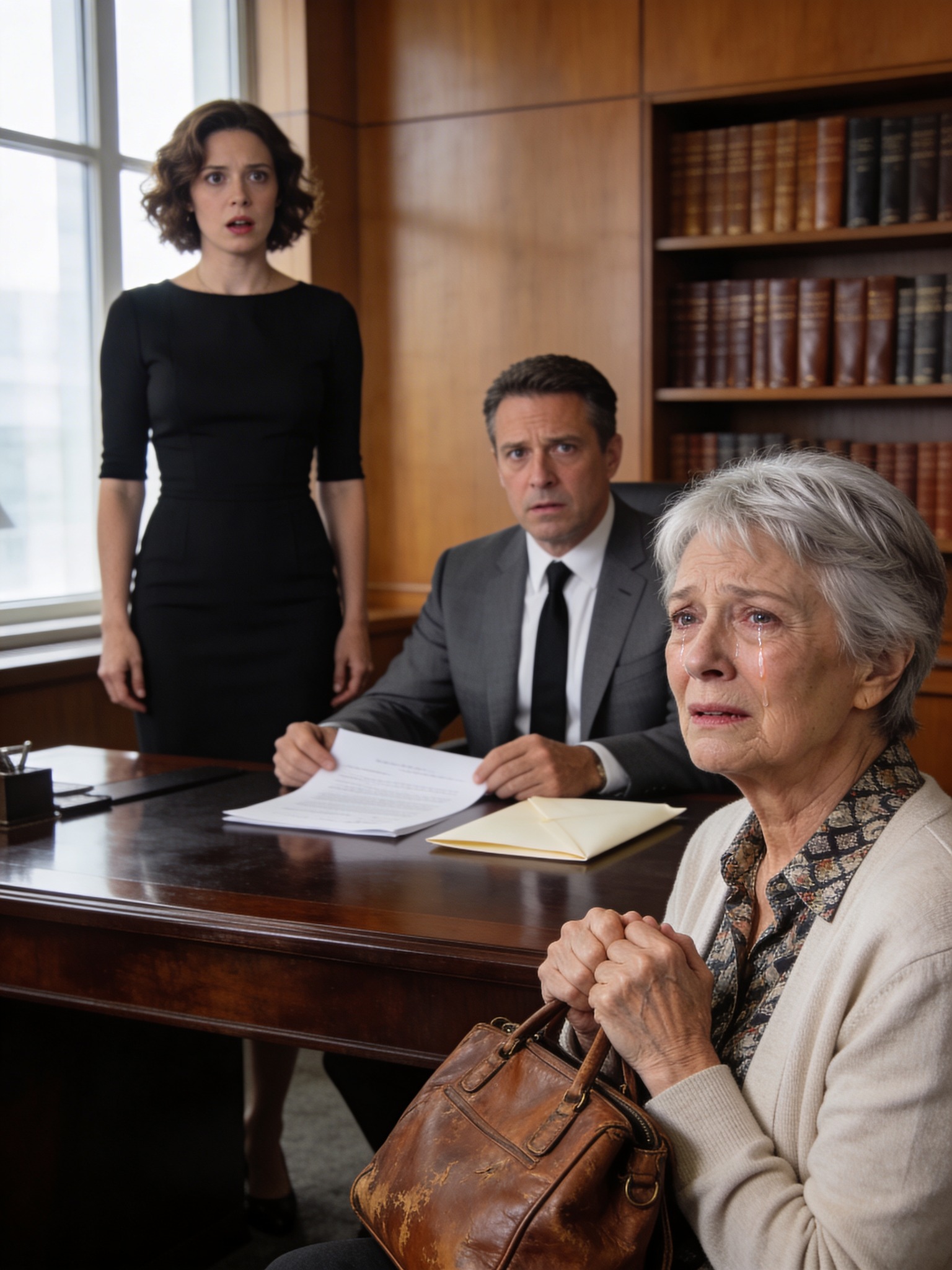
Two weeks later, we met at a law office in New York to hear the will.
Marble floors. Dark wood. A ticking clock that sounded louder than my heartbeat.
I sat in a simple black dress.
Vanessa arrived like royalty.
Confident. Composed. Certain.
Attorney Richard Lawson greeted us, his expression serious. Beside him stood a woman from his firm—and a quiet man in a gray suit.
Later, I learned he was a forensic auditor.
At the time, I only knew one thing:
Something wasn’t right.
The reading began.
Small donations. A fund for long-time employees. A scholarship for underprivileged kids learning to code.
That was Daniel.
Even in death, he was thinking of others.
Vanessa listened impatiently, like someone waiting for the main event.
Then came the company assets.
Shares. Accounts. Properties.
I barely understood—but I saw her smile growing.
Victory, already forming.
Then Richard stopped.
Turned a page.
“Now we’ll read Clause Seven.”
Vanessa looked up.
Something shifted.
The clause stated that her inheritance depended on three conditions:
No fraud or manipulation of Daniel in his final year.
No hidden financial transfers.
And no attempts to isolate or mistreat his mother.
Her smile vanished.
“That’s ridiculous,” she snapped. “You can’t do that.”
“Yes,” Richard replied calmly. “Under a trust structure, he can.”
And he wasn’t finished.
If any condition failed, her inheritance would be frozen.
The majority of assets would transfer into a trust.
And if wrongdoing was confirmed—
I would receive controlling shares, a lifetime income, our old home…
And leadership of a foundation Daniel created in my name.
Vanessa stared, stunned.
“This makes no sense. Daniel would never do this.”
Richard nodded toward a screen.
“That’s why he left a message.”
The lights dimmed.
And suddenly—
There he was.
My son.
Alive on screen.
Tired. Unshaven. Real.
I couldn’t breathe.
“If you’re watching this,” Daniel said, “something went very wrong.”
He spoke of unauthorized transactions. Hidden payments. Fraud.
Then he said it.
“My wife, Vanessa… and CFO Mark Delaney were involved.”
Vanessa shot to her feet. “This is insane!”
But Daniel kept going.
“Mom… I’m sorry. I tried to fix this without dragging you into it. But silence protects the wrong people.”
My chest burned.
“No one gets to make you feel small in my name,” he said. “Not ever.”
The video ended.
Evidence followed.
Fake accounts. Altered documents. Suspicious payments to a mechanic before the crash.
Even signs the brakes had been tampered with.
This wasn’t just betrayal.
It was a crime.
Investigators stepped in.
Not dramatic—no handcuffs on the spot.
But accounts were frozen. Assets locked. An investigation opened.
Vanessa didn’t look elegant anymore.
She looked… exposed.
In the weeks that followed, everything unraveled.
Mark tried to flee—he was caught at the airport.
Messages surfaced. Financial trails. Connections to the mechanic.
The case moved slowly—but it moved.
Justice, I learned, doesn’t heal.
It organizes the chaos.
But it cannot bring your child back.
What Daniel gave me wasn’t money.
It was dignity.
He made sure the truth lived on.
He made sure I wasn’t erased.
Today, I still live simply.
But in the garage where his company began, we built a tech center for kids who remind me of him.
Tired. Determined. Full of impossible dreams.
Sometimes, I hold his old chipped coffee mug.
And I remember the boy who believed he’d build something meaningful.
He did.
Not the millions.
Something stronger.
Something that even betrayal couldn’t destroy.
That day in the law office, I thought I was losing everything again.
I didn’t know—
My son was giving me my voice back.
And proving one thing, beyond doubt:
No matter how powerful the lies…
One truth is enough to bring them down.