I used to think I knew the sound of my daughter’s life: the clang of her spoon against the cereal bowl, the zip of her backpack, the soft click of the front door as school pulled her into the day. After the divorce, those noises became our entire duet—two people keeping perfect rhythm without needing words. Lily, thirteen, never missed a beat: homework on the kitchen table, shoes always side by side, report cards that made me puff with quiet pride. I told myself the quiet meant we were winning.
Then Mrs. Greene leaned over our shared fence, voice low, eyes kind. “Your girl’s been coming home early again, sometimes with friends. During school hours.” The word again hung in the cold morning like a stray leaf that refuses to fall. I laughed it off, blamed the old eyes next door, but the sentence followed me to work and sat on my shoulder all shift. That night I studied Lily over spaghetti. She twirled noodles slower, shoulders curved inward like a closed umbrella. When I passed on the neighbor’s worry, her giggle arrived a heartbeat late.
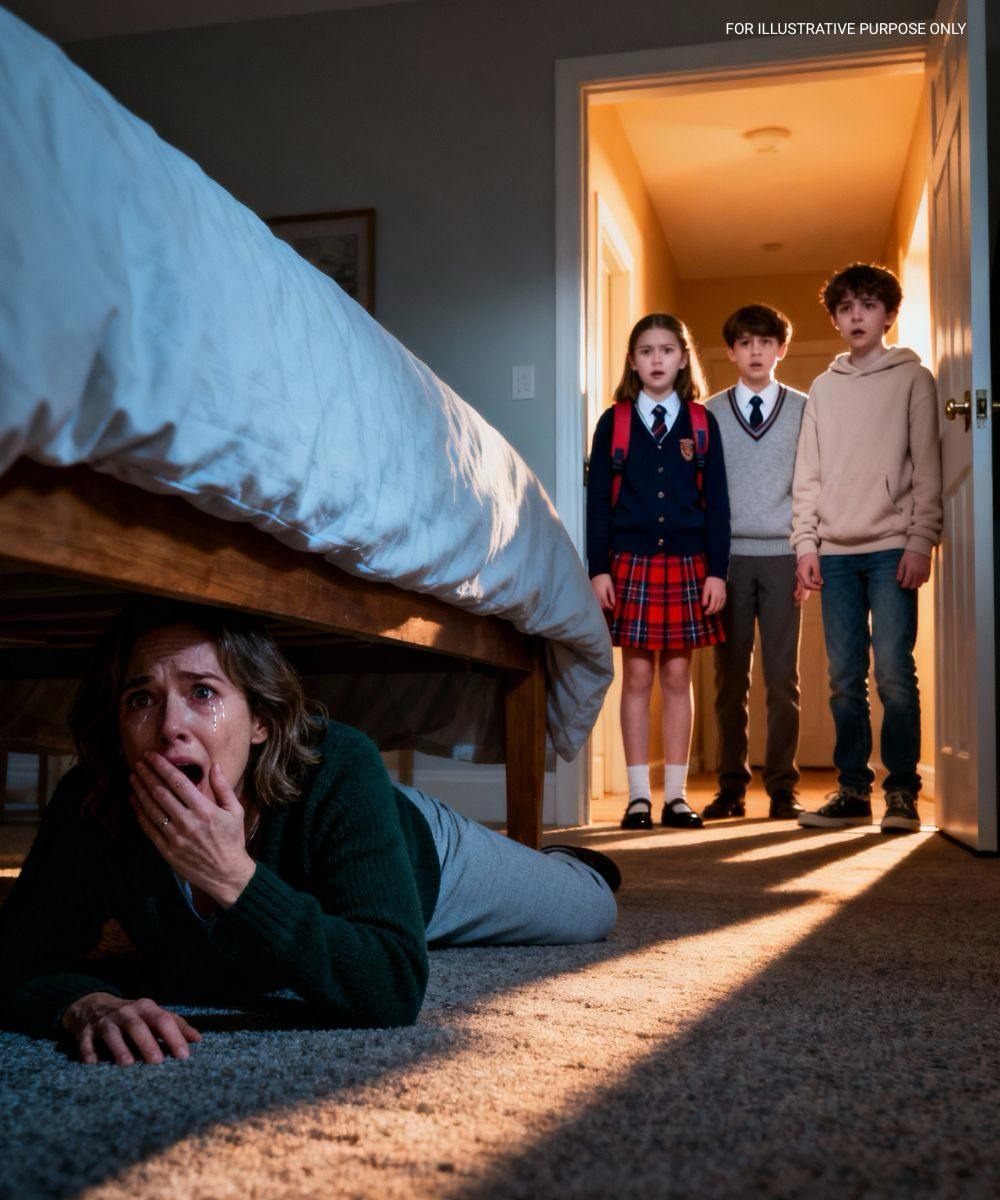
Sleep abandoned me. By 2 a.m. I decided trust needed a louder microphone. The plan felt like betrayal: kiss her goodbye as usual, then circle back like a spy. I parked three blocks away, re-entered through the basement, and crept into her room. The space beneath her bed was a canyon of dust bunnies and forgotten art projects. I lay flat, cheek against hardwood, and waited for whatever truth dared to knock.
At nine-twenty the front door cracked open. Feet tiptoed across the hall—more than one set. I pressed a hand to my mouth as sneakers stopped inches from my nose. Lily’s voice, soft as prayer: “Coats off, voices low. You’re safe now.” A boy sniffed, another child coughed. They began to speak in fragments no teenager should own: lockers slammed against backs, names hissed like curses, lunches dumped into trash while teachers stared at phones. Each story landed on the floorboards above me, tiny bombs that shook the house more than any earthquake report.
When I could not bear the weight of their whispers, I slid out. Four pairs of eyes widened, but Lily’s were the only ones I saw—wide, wet, terrified she had failed me by protecting broken classmates. I opened my arms, and she folded into them like paper that had been trying to stay flat for too long. The other kids watched a mother cry without sound. That afternoon our living room turned into a courtroom of couch cushions and paper evidence. Parents arrived, texts were shown, principals called. Investigations crawled forward, slow and grumpy, but they moved.
Weeks later Lily and I stood at the same door where suspicion first entered. She was laughing at a joke I finally understood. The house sounded different now—louder, messier, honest. I told her secrecy had been brave, but honesty was braver. She rolled her eyes the way only teenagers can, then hugged me so hard the air left my lungs. Under that squeeze I felt a new rhythm taking root: two people winning, not because they kept perfect time, but because they learned to share the scary verses and still stay in the song.