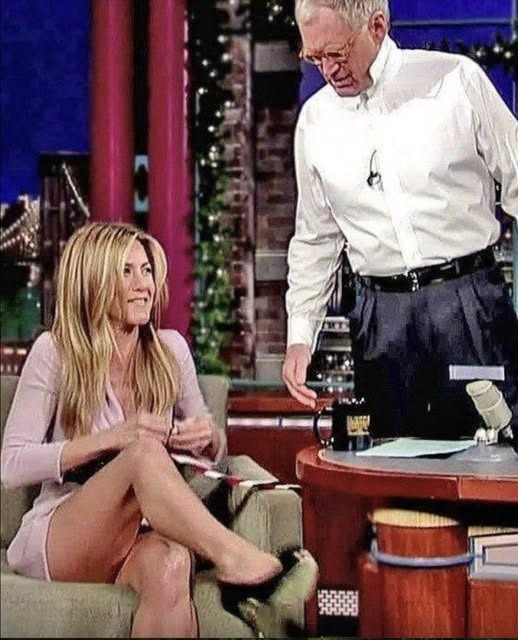
Jennifer Aniston walked onstage in June 2006 wearing sensible black shorts and a smile meant to sell a movie. Within seconds David Letterman turned the spotlight into a magnifying glass. “Tremendous legs,” he announced, leaning halfway out of his chair. The cameraman obeyed, tightening the shot until her knees filled America’s TV screens. Aniston laughed—tight, polite—and blamed the summer heat for the outfit. The host kept going, circling back twice more before the seven-minute segment ended.
Viewers at home chuckled then; YouTube commenters cringe now. What once passed for playful flattery looks like a slow-motion ambush through a 2025 lens. Aniston’s shoulders inch forward, her hands press flat between her thighs, the universal body language of “please move on.” Letterman, oblivious or calculating, keeps zooming in—verbally and optically—until the studio feels smaller than an exam room.
The leg monologue wasn’t even the worst of it. Rewind to 1998: mid-interview, Letterman grabs a lock of her hair, twists it toward his mouth, and pretends to inhale. He then hands her a tissue—his spit on her curl—while the band plays a jaunty sting. Aniston wipes, smiles, and stays. That endurance became part of her brand: the unflappable girl-next-door who could survive any awkward moment. Survival, however, is not the same as comfort.
When she returned two years later in a pink party dress, she arrived armed: a Brooks Brothers tie she’d worn on a magazine cover, gift-wrapped for the host. The gesture flipped the power dynamic—she was now the presenter, he the recipient being dressed on camera. Letterman joked about short ties; Aniston adjusted the knot, reclaiming visual control inch by inch. Viewers remembered the flirty banter; they forgot the strategic gift that forced the camera to focus on his torso, not her legs.
Aniston has never publicly bashed Letterman. She doesn’t need to—the clip archive does it for her. What’s striking is how cleanly the moment maps onto today’s conversations about consent, gaze, and the subtle difference between compliment and commodification. Late-night couches were once safe zones where stars could pitch projects; they were also pressure chambers where women had to decide, in real time, how much objectification came with the publicity.
The shorts she wore that night are probably folded in a drawer somewhere, relics of a era when “it’s just Dave being Dave” was considered a punch line. Rewatching through modern eyes, the punch line lands differently—on the host, not the guest. Aniston’s grace remains intact; the humor, however, has aged about as well as milk on a summer sidewalk.