Part 1
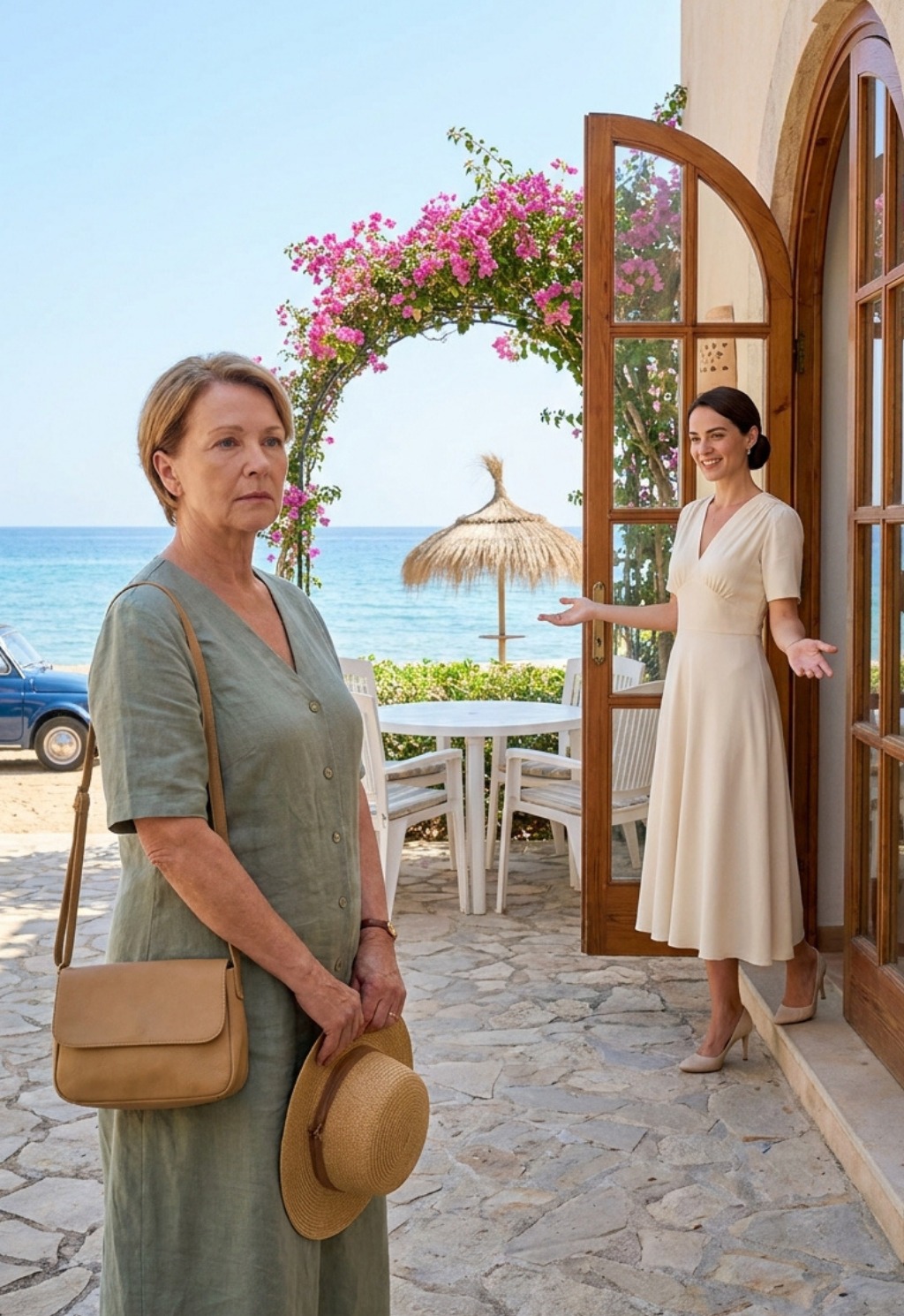
“There is no more room for you here, Rosalind; the house is packed and we really do not want any inconveniences.” That was the first thing Tiffany, my son’s wife, said to me when she saw me standing in the doorway of my own home overlooking the Atlantic.
I had arrived in Newport that Friday in January with only one thought on my mind: to rest. I was seventy years old, a widow living in a cramped apartment in Philadelphia, and for months I had been feeling the heavy weight of the workshop and a weariness that a single night’s sleep couldn’t fix.
This house was not a luxury someone had gifted to me. It was the result of twenty years of sewing inexpensive wedding gowns, altering school uniforms, and mending pants for people who always haggled over the price.
When my husband Winston died, I was fifty. From then on, every spare dollar I saved went into an account I called “my little breath of air.”
With that money, years later, I bought a small house on the Rhode Island coast that was half-ruined with damp walls and a wild garden. I fixed it up myself, painting the walls, changing the locks, planting hydrangeas, and learning to repair things I never imagined I would touch.
That house was my refuge and my pride. It was the proof that I could still build something for myself.
That is why, when I walked out onto the street and saw three unfamiliar SUVs, loud music blaring, and wet towels hanging over my wicker chairs, I felt a wave of confusion followed by a cold rage. The front door was wide open.
Children were running around on the terrace, kicking a ball near my ceramic pots. A television was shouting in the living room and voices were drifting out from my kitchen.
Then Tiffany appeared wearing my hand-stitched apron, the one I had embroidered with my own initials. “Oh, mother-in-law,” she said with that sweet smile that always hid a sharp edge.
“I thought you weren’t coming until February, so since Peter told us we could use the house this week, I brought my family for a vacation.” Behind her, I saw her sister sprawling on my couch and her mother rummaging through my cupboards as if she owned them.
There were barefoot teenagers running up the stairs and a baby asleep on the window seat where I usually read in the afternoons. “I told Peter I was coming today,” I replied, trying my hardest to keep my voice steady.
Tiffany simply shrugged her shoulders. “He probably forgot because he is so swamped at work, but we are already settled in and there really is no room for extra guests.”
The phrase “extra guests” echoed in my head. In my own house, everyone stopped what they were doing to stare at me.
It was as if they expected me to scream or make a scene, but I refused to give them that satisfaction. “Okay,” I said with a gentle smile. “I will find somewhere else to stay for now.”
Her eyes shone with a clear sense of triumph. I went to a small motel a few miles away that had a partial view of the water where I could barely see the roof of my home.
I did not sleep that night, not because I was sad, but because I finally had total clarity. I understood that this was no longer just a family rudeness.
It was an invasion and a message. The next morning, when I returned to enter with my own key, I discovered that what Tiffany had done was much worse than I had imagined.
Part 2
My key would not turn. It wasn’t that I had the wrong key, but someone had replaced the entire lock cylinder on the front door.
I stood motionless in front of the entrance with the sound of the waves behind me and an icy feeling settling in my chest. I knocked three times, very loudly.
Mindy, who was Tiffany’s sister, opened the door with messy hair and a coffee mug in her hand. “Oh, Mrs. Sterling,” she said, treating me like an unwelcome solicitor. “Did you forget something?”
“Yes, I forgot several things including my clothes, documents, and personal belongings,” I replied firmly. Mindy hesitated and looked me up and down before closing the door in my face to go ask Tiffany for permission.
Five minutes later, Tiffany appeared wearing my favorite bathrobe with her hair still wet from a shower. “What happened now?” she asked while feigning a look of concern.
“I need to get my things out of the house,” I told her. “Right now everything is a mess since we have taken apart rooms and moved furniture, so maybe it would be better if you came back next week,” she suggested.
“No, I am going in today,” I insisted. She let me pass, but she did it with the attitude of someone granting a massive favor.
I went straight up to the master bedroom where the bed was unmade and other people’s cosmetics were scattered across my dresser. I felt a pang of disgust, but I kept moving toward the closet.
Behind some old winter coats, there was a hidden panel that Winston had helped me install years ago. I pressed the exact spot and the secret compartment popped open.
Inside was the fireproof box where I kept the original deed, property tax receipts, and all the payments made in my name. I took out the folder and started reviewing the papers until I saw a document that stopped my heart.
It was an assignment of rights. Using a forged version of my name and signature, it transferred fifty percent of the property to Peter and Tiffany.
The date on the paper was from six months ago. My hands went numb because I had never signed such a thing or authorized any transfer.
I took clear pictures of it with my phone and tucked my real documents into my bag. I left the fake document exactly where I had found it so they wouldn’t know I knew.
When I walked back downstairs, Tiffany was waiting for me with her arms crossed. “Are you done already?” she asked.
“Yes, and thank you for letting me in,” I said calmly. “We changed the locks for security reasons because of the children, as we didn’t want just anyone getting in,” she added.
I took a deep breath. “That is very responsible of you,” I replied before walking out.
I returned to the motel and immediately called my lawyer, Simon Vance, who had handled the original purchase of the house. I sent him all the photos and two hours later he called me back with a very grim tone.
“Rosalind, the signature does not match yours at all,” Simon said. “Even worse, the document was submitted to the Registry months ago and is currently under review.”
“Does that mean this is fraud?” I asked. “Yes, it is forgery and an attempted theft of your property,” he confirmed.
I hung up and immediately called my son, Peter. He answered on the third ring and sounded very distracted.
“Mom? Is everything okay?” he asked. “I am in Newport at a hotel because your wife kicked me out of my house, and I also found a document where I supposedly gave you half of my property,” I told him.
There was a silence so long that I thought the call had dropped. “What are you saying?” he finally whispered.
“I am going to send you a photo and I want you to tell me if that signature is actually yours,” I said. Thirty seconds after I sent the image, he called me back sounding absolutely devastated.
Part 3
“That is not my signature, Mom,” Peter said with a trembling voice. I knew my son well enough to know he was telling the truth.
“Did you know anything about this at all?” I asked him. “I swear I didn’t, though Tiffany mentioned fixing the house situation months ago to secure the kids’ future,” he explained.
“She also changed the locks on me,” I added. I heard him mutter a curse under his breath before promising to talk to her immediately.
I did not sleep at all that night. At eleven thirty, he called me again to tell me that Tiffany had confessed to everything.
She admitted she had used a shady manager to prepare the document and forge both of our signatures. She thought if she managed to register the transfer, it would be easier to convince me that the house belonged to everyone.
Her justification was that I was already old and didn’t need a beach house, so she was just protecting the family heritage before I lost my mind. It wasn’t just greed; it was a total contempt for my existence.
“I told her that if she didn’t withdraw the filing tomorrow, I would file for divorce,” Peter told me. The next morning, Tiffany called me with a tone that sounded almost offended.
“This could have been settled between family, Rosalind, and you didn’t have to make it a legal issue,” she snapped. “You made it a legal issue when you forged documents to steal my home,” I replied.
“I was only thinking about the future,” she argued. “The future does not give you the right to steal my present,” I told her firmly.
That same day, Simon filed a formal complaint of land registry fraud to block any attempt to seize the house. Before the matter escalated into a courtroom, Tiffany withdrew the proceedings.
She sent a letter drafted by a lawyer calling it a “misunderstanding” and a “document prepared in error.” There was not a single real apology or a word of shame from her.
I decided not to pursue criminal charges for one reason only, which was my son. I didn’t want my grandchildren to grow up hearing that their grandmother had sent their mother to jail.
However, I understood that forgiving does not mean leaving the door open for more abuse. I had all the locks changed again and installed a high-tech security system with cameras.
I rewrote my will so the house would belong to Peter only under strict clauses that prevent Tiffany from ever touching it. If he were to pass away before me, the property would go to a local coastal preservation trust.
In February, Peter came to see me alone. We walked along the beach in silence until he finally asked for my forgiveness for not noticing who he was living with.
I hugged him, but I did not offer hollow comfort. Months have passed since that Friday when I found my house occupied by people who felt they owned my hard work.
Tiffany and I now only exchange cold greetings when there is no other option at family events. Peter is trying to save his marriage, although he confessed that the trust between them is gone.
I have returned to the sea more frequently and with more confidence than ever before. Sometimes I invite my friends who also worked their whole lives to have something of their own.
We sit on my terrace, drink wine, and watch the sunset while talking about the things we struggled to learn. Last week, one of them asked me if I regretted being so harsh with my daughter-in-law.
I looked at the Atlantic and gave her the only truth I had left. “No, because unlimited kindness is not kindness; it is permission,” I said.
That night, sitting alone on my terrace in my house facing my sea, I felt a sense of pride. Sometimes the bravest way to defend your life is to simply refuse to leave it.
THE END.