The phone rang at 2:17 p.m. on a Tuesday, an hour typically reserved for the dull rhythm of spreadsheets and fluorescent office lights.
I was staring at a grid of data that had lost all meaning when the vibration rattled against my mahogany desk. The office was a symphony of clicking keys and distant laughter, oblivious to the shift in the atmosphere.
I looked down at the unknown number and felt a strange hesitation. My thumb hovered over the screen as the second ring turned into a third, a heavy sensation settling in my lungs.
I finally swiped to answer, pressing the glass to my ear. “Is this Maya Sullivan?” a man asked, his voice steady and clinical.
“Yes, it is,” I replied, my voice sounding smaller than usual. “This is Sergeant Miller from the Phoenix Metro Police. Your daughter, Chloe, has been admitted to Valley North Hospital.”
The air in the room seemed to vanish instantly. “She is currently in stable condition, but you need to arrive as soon as possible,” he added.
“Stable?” I repeated, the word tasting like copper in my mouth. “What exactly happened to her?”
“The officers on-site will provide details when you get here,” he said with a professional detachment that made my skin crawl. “I should also inform you that the vehicle involved is registered in your name.”
The call disconnected before I could ask another question. I sat frozen for a long second, listening to the hum of the air conditioning while my hands began to shake uncontrollably.
I stood up so abruptly that my chair clattered against the floor, drawing a sharp look from a coworker nearby. I grabbed my purse and keys, moving toward the exit without a single thought for the work I was leaving behind.
“Maya, is everything alright?” my manager asked, stepping into my path with a look of feigned concern. “Family emergency, I have to go now,” I muttered, pushing past him toward the elevator.
The ride down felt agonizingly slow, each floor stop feeling like a personal insult to my urgency. When I burst into the parking garage, the Arizona heat hit me like a physical blow, thick and suffocating.
I ran toward my designated spot, my breath hitching in my chest. I came to a dead stop when I saw nothing but empty asphalt and painted white lines where my SUV should have been.
Then, the realization crashed over me with the force of a tidal wave. I had lent my car to my sister, Bridget, that morning after she called me with a cheerful, entitled plea.
“We want to take the kids to the Sun Valley Water Park, but our van is in the shop,” she had said over breakfast. “Can we use yours so we can all fit together?”
My mother had jumped on the line too, adding her soft, persuasive pressure. “It will be wonderful for Chloe to spend the day with her cousins, Maya,” she had insisted.
I had been too tired to argue, so I handed over the keys, thinking I was being a good daughter and sister. Now, I was standing in a hot garage, frantically summoning a ride-share app while pacing in tight, panicked circles.
The app informed me my driver was four minutes away, but those minutes felt like hours of mental torture. When the car finally arrived, I scrambled into the back seat before the driver could even say hello.
“Valley North Hospital, please, as fast as you can,” I told him, my voice cracking. “Traffic is a mess at this hour, ma’am,” he replied, glancing at me through the rearview mirror.
The city seemed to conspire against me, with every light turning red the moment we approached. I watched people walking dogs and sipping iced coffees, wondering how the world could be so normal when mine was falling apart.
I tried calling my mother, but it went straight to voicemail. I tried Bridget three times, but she didn’t pick up, leaving me with nothing but the sound of a ringing tone.
When we pulled up to the hospital entrance, I sprinted through the sliding glass doors into the refrigerated air of the lobby. “I’m Maya Sullivan, my daughter Chloe was brought in by the police,” I gasped at the reception desk.
The woman looked at her computer and then gave me a look of practiced sympathy. “Yes, she is in the pediatric ward, but a nurse needs to speak with you before you go back.”
“I just need to see her,” I pleaded, my heart hammering against my ribs. “I understand, but please fill out these forms and provide your identification first,” she insisted.
A few minutes later, a nurse named Sarah approached me with a somber expression. “Mrs. Sullivan, Chloe is awake and she is going to be okay,” she said gently.
I let out a sob of relief, but the nurse didn’t smile back. “She was found alone in a locked vehicle in a shopping center parking lot,” Sarah continued.
The world tilted on its axis as I stared at her in disbelief. “Because of the circumstances and the heat index, we were required to contact Child Protective Services and the police,” she explained.
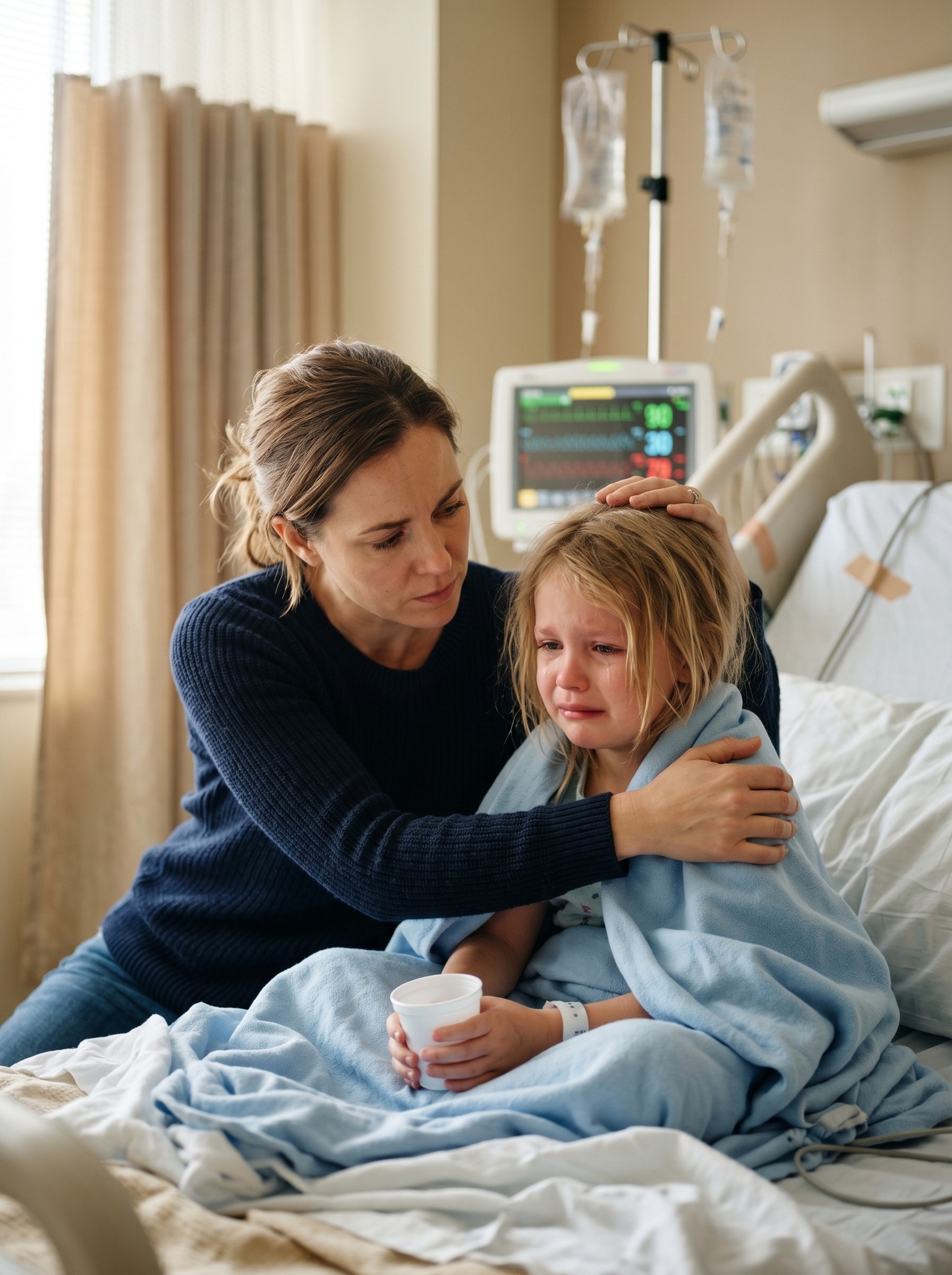
I followed her down a long, sterile hallway, my legs feeling like they were made of lead. When she pushed open the door to a private room, I saw Chloe sitting on the edge of a high hospital bed.
Her face was beet red, and her hair was matted with sweat, making her look incredibly small. “Mommy!” she wailed the moment she saw me, her face crumpling into tears.
I rushed to her, pulling her into my arms and holding her so tightly I could feel her heart racing. She sobbed into my shoulder, her tiny fingers clutching my shirt as if she were afraid I would disappear.
“I’m here, baby, I’ve got you,” I whispered, though my own tears were blurring my vision. She smelled like salt and hospital soap, her body still radiating a terrifying amount of heat.
“I was so thirsty,” she whimpered between hiccups. “I tried to get out, but the door wouldn’t open.”
The nurse stood by the door, waiting for the crying to subside before she spoke again. “A passerby saw her banging on the window and called for help,” she told me.