I Followed My Daughter After School… And Uncovered a Hidden Truth
“Emily hasn’t been in class all week,” her teacher said.
For a moment, I didn’t even process the words. I actually smiled, convinced there had to be some kind of misunderstanding.
“That’s not possible,” I replied lightly. “I watch her leave every morning.”
There was a pause—heavy, deliberate.
“I’m sorry,” the teacher said carefully. “But she hasn’t been in class since Monday.”
I leaned back in my chair, staring at the calendar on my wall as if it might suddenly rearrange itself and prove her wrong.
Monday. Tuesday. Wednesday. Thursday. Friday.
An entire week.
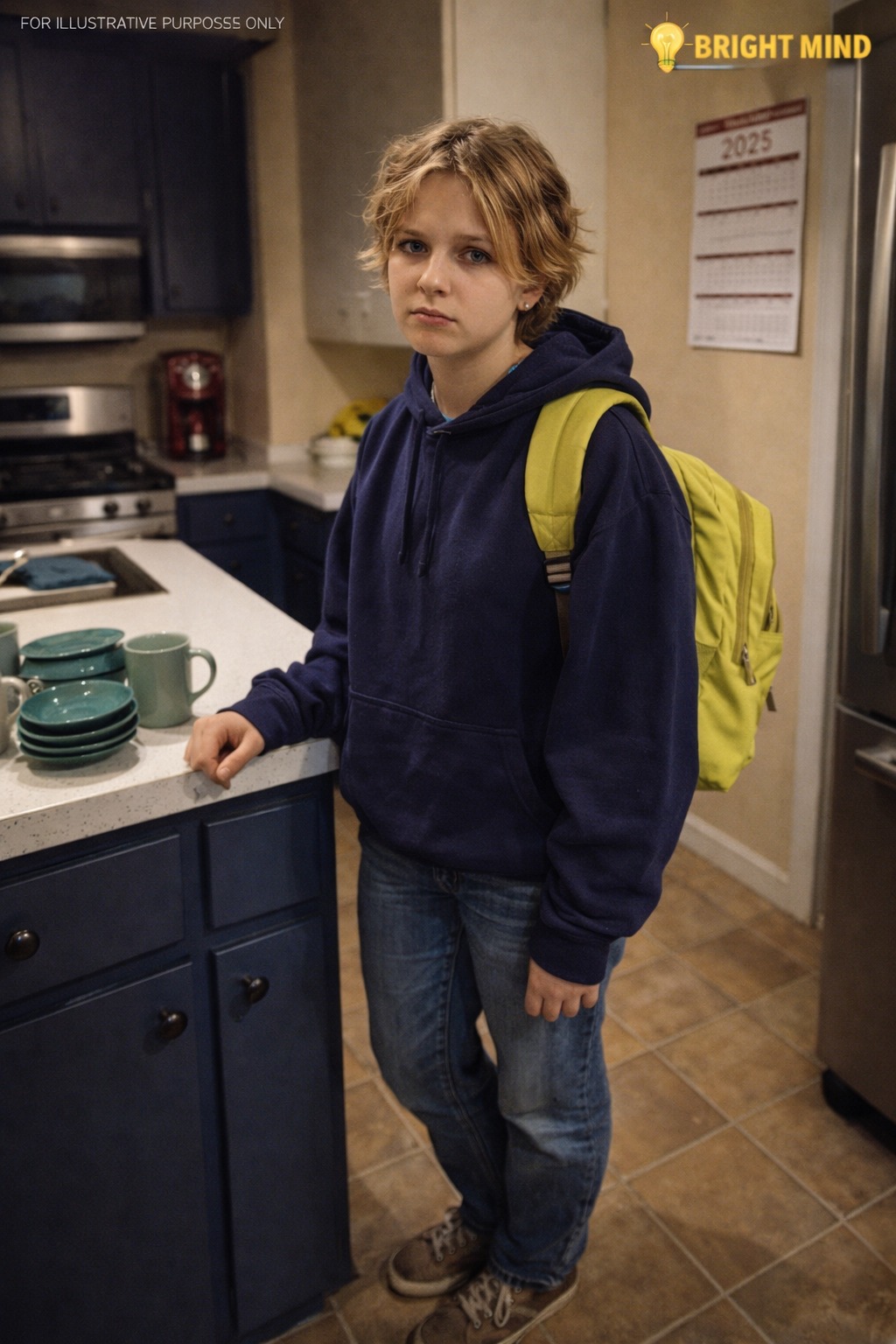
Every morning at 7:30, I watched my fourteen-year-old daughter grab her backpack, pull her hoodie over her head, and walk down the driveway. I saw her board the bus. We waved to each other.
So where had she been going?
Emily had never been a troublemaker. Quiet? Yes. Moody? Sometimes. But not reckless. Not dishonest.
Her father, Mark, and I divorced years ago. He’s the kind of man who remembers your favorite song but forgets to renew his registration—kind-hearted, but scattered. During our marriage, I handled the structure. After the divorce… not much changed.
Still, we made it work.
Or so I thought.
That evening, I waited for Emily in the kitchen.
She came home like usual—dropped her bag, headed straight for the fridge.
“How was school?” I asked casually.
“The usual,” she said instantly. “Math’s terrible. History’s boring. Tons of homework.”
Too smooth.
“And your friends?” I asked.
She hesitated—just for a second.
“They’re fine,” she snapped. “Why?”
“No reason.”
She rolled her eyes and disappeared upstairs.
I didn’t follow.
If she had been lying for days, confronting her now would only shut her down. I needed to understand first.
The next morning, I acted like nothing was wrong.
I watched her leave at 7:30.
Then I grabbed my keys.
I parked far enough away so she wouldn’t see me. I watched her get on the bus, laughing with another girl like everything was normal.
Maybe the school was wrong.
I followed the bus anyway.
When it arrived at the high school, students poured out in waves. Emily stepped off with them.
Then—
She slowed down.
She let everyone pass her.
And instead of going inside… she stayed behind.
My stomach dropped.
Seconds later, an old red pickup pulled up beside her.
Rust along the sides. One dim headlight.
Emily didn’t hesitate.
She got in.
My heart slammed against my ribs.
I reached for my phone, ready to call the police—but she wasn’t scared.
She was smiling.
The truck drove off.
I followed.
They headed toward the edge of town, near the lake. Quiet. Empty.
The truck pulled into a gravel lot.
I pulled in behind them before I could second-guess myself.
I got out of the car and walked straight toward them.
Emily saw me first.
Her smile vanished.
The window rolled down.
And there—
Was Mark.
“You’ve got to be kidding me,” I said.
“Zoe—” he started.
“You’re helping her skip school?”
Emily leaned forward. “Mom, stop. I asked him.”
“That doesn’t make this okay.”
“She didn’t want to go,” Mark said.
“That’s not how school works!”
“It’s not like that,” Emily muttered.
“Then explain it.”
She stared down at her hands.
For a moment, I thought she wouldn’t answer.
Then, quietly—
“They hate me.”
Everything inside me shifted.
“Who?” I asked.
“The girls at school,” she said. “All of them.”
Her voice trembled.
“They move their stuff so I can’t sit down. They whisper when I talk. Call me names. Ignore me like I don’t exist.”
My chest tightened painfully.
“Why didn’t you tell me?”
“Because you would’ve made it worse,” she snapped. “You’d go to the school, and then I’d be the snitch.”
Mark spoke gently.
“She’s been getting sick in the mornings. Throwing up from stress.”
I looked at him, stunned.
“She begged me not to tell you,” he added. “I thought she just needed a break.”
“So you let her disappear?” I said.
He handed me a yellow notepad.
It was filled with notes—dates, names, incidents.
“We were building a report,” he said. “So the school would have to take it seriously.”
Emily wiped her eyes.
“I was going to say something… eventually.”
“When?” I asked softly.
She didn’t answer.
Mark sighed. “I should’ve called you.”
“Yes,” I said. “You should have.”
Then I looked at Emily.
“Avoiding school doesn’t fix this,” I said gently. “It gives them control.”
She looked exhausted.
Mark cleared his throat. “Let’s deal with it. Together. Now.”
“Now?” Emily asked, panicked.
“Yes,” I said. “Before you change your mind.”
We drove back to school.
Walking in together—both parents beside her—felt different. Stronger.
We met with the counselor, Ms. Ramirez.
Emily spoke.
At first, slowly. Then clearly.
Everything.
Ms. Ramirez listened carefully.
When she finished, the room was silent.
“Thank you for telling me,” she said. “We’ll address this today.”
“Today?” Emily asked.
“Today.”
I saw something change in her expression.
Not relief exactly.
But validation.
Outside, Mark turned to me.
“I should’ve told you,” he said again.
“Yes,” I said. “But you weren’t wrong to help her breathe. We just need to guide her better.”
“I don’t want to be the parent who lets her run,” he admitted.
“Then don’t be,” I said. “Be her dad.”
He nodded.
Emily turned around. “Are you two done talking about me like I’m not here?”
Mark laughed. “For now.”
She rolled her eyes—but she smiled.
The aftermath wasn’t instant.
There were meetings, schedule changes, consequences for the other students.
But the real change happened at home.
Emily started talking.
About everything.
Mark and I communicated better, too. No more secrets. No more separate decisions.
A few weeks later, Emily came home, cheeks flushed.
“How was school?” I asked.
“Good,” she said.
And this time… she meant it.
She talked about new friends, a group project, trying out for debate.
Later, Mark texted me.
“She seemed okay today?”
“She was,” I replied. “More than okay.”
A pause.
“We did good,” he said.
“We did.”
The world won’t ever be perfect.
There will always be pressure, cruelty, things we can’t control.
But we can make sure she never faces it alone.
I used to think parenting meant catching every lie.
Now I know—
It means creating a space safe enough for the truth to come back on its own.
And that morning, when I followed my daughter and saw her get into that old truck…
I thought I was about to uncover something terrible.
Instead—
I found a child who was hurting.
And a family learning how to stand together.